Akeneo Alternative Why Enterprise Teams Switch to Bluestone PIM

Bluestone PIM is the Akeneo alternative for enterprise teams who need predictable pricing, native AI, and upgrades that don't break custom work.

This page compares Bluestone PIM and Akeneo on architecture, AI capabilities, and pricing, so businesses can make an informed decision.

bluestone-2
bluestone-2

Customers who chose Bluestone PIM

Saint-Gobain Norway
Bergene Holm AS
Intersport
Stadium
ZEEMAN

Key Takeaways

LLM-2
  • Bluestone PIM has 700+ API endpoints, so AI agents and external tools can automate tasks that Akeneo still requires you to do manually in the UI.

  • Bluestone PIM includes AI enrichment, translation, and an AI Agent in every plan. Akeneo charges extra for AI features.

  • Bluestone PIM works with any LLM. You choose your provider and pay your own token costs.

  • Bluestone PIM pricing is usage-based. Akeneo pricing starts at an estimated €40,000 to €100,000+ per year, with separate charges for DAM, API access, and AI.

  • Bluestone PIM offers a structured migration path. Implementation typically takes around three months depending on scope.

 Why Do Companies Switch
From Akeneo To Bluestone PIM?

Akeneo works well for teams with straightforward catalogues and a single market. The issues tend to surface when complexity increases.

AI that works inside the PIM, not outside of it

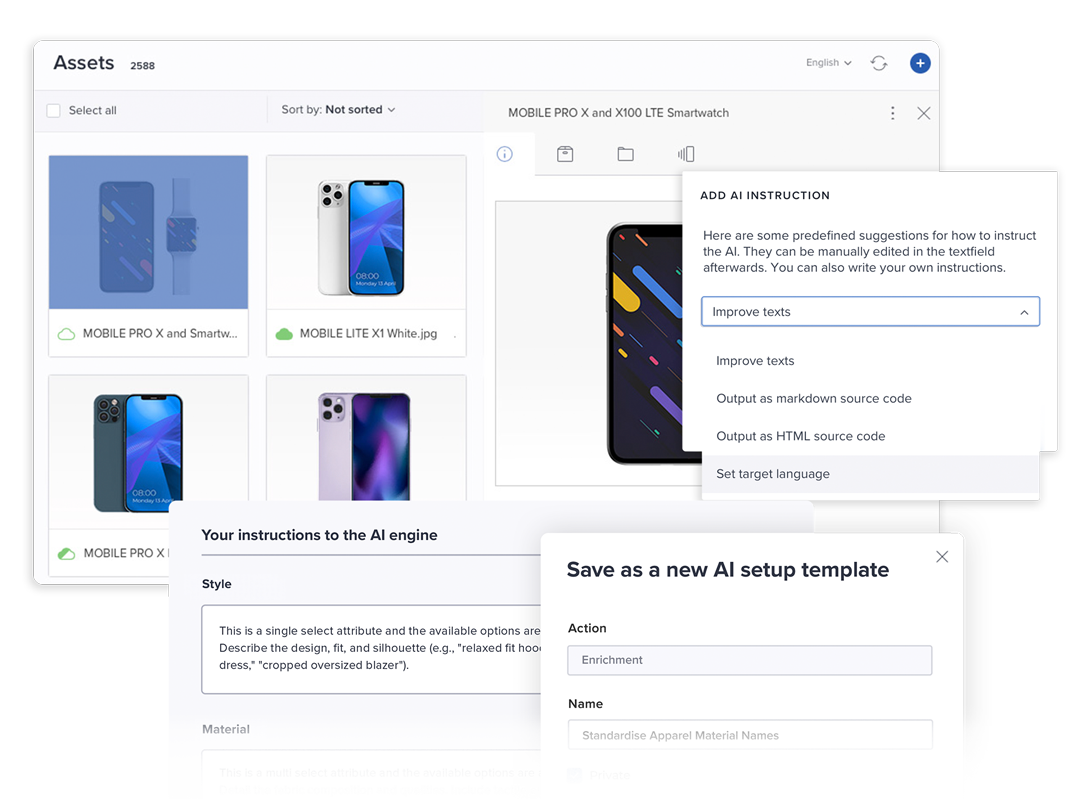
Bluestone PIM has AI enrichment, translation, and an AI Agent built into every plan. You can choose your own LLM and enrich thousands of SKUs without leaving the platform. No copy-pasting between ChatGPT and your PIM. MCP is also available

Upgrades that don't break your setup

Bluestone PIM upgrades run in the background. Every configuration carries over automatically. No patches to schedule, no extensions to rebuild. Performance stays the same whether the catalogue holds 10,000 SKUs or millions.

Pricing you can predict

Bluestone PIM includes DAM, CDN, AI tools, and a supplier portal in every plan. No add-ons, no seat fees, no price hike at renewal. Pay only for what you use. You can calculate your ROI now.

Who Should Consider Switching From Akeneo To Bluestone PIM?

Product-Configuration-1

Akeneo Community Edition users facing September 2026 end of support

Akeneo Growth Edition users hitting limitations with API access, AI capabilities, or integration flexibility

Akeneo Enterprise users frustrated by opaque pricing, monolithic architecture, or expensive third-party connectors

Manufacturers needing ERP integration (SAP, Dynamics), supplier portals, and PDF catalogue generation

Retailers scaling beyond 100,000 SKUs who need cloud-native performance without replatforming

Top 3 reasons why Bluestone PIM is the best alternative to inriver

How Does Akeneo Pricing Compare To Bluestone PIM?

Industry estimates place Akeneo Enterprise at €40,000 to €100,000+ per year, depending on SKU volume, channels, and add-ons. Features that are standard in Bluestone PIM often require paid upgrades with Akeneo.


Bluestone PIM uses a pay-for-what-you-use pricing model. The cost is based on product data volume, channels, and users. No hidden implementation fees.

How Does Bluestone PIM Compare To Akeneo?

When you look past the brand and into the architecture, the differences between Akeneo and Bluestone PIM start to matter, especially for teams managing complex catalogues across multiple channels, languages, and markets.

Here's what's different under the surface.

Features

Bluestone PIM Akeneo

Core architecture

MACH-certified, true microservices. The only PIM in the market built API-only from day one in 2016.

Evolved from open-source monolith into SaaS. MACH-aligned but not natively microservices.

API coverage

Full coverage, 700+ unique API actions, full headless capability.

30-50 API endpoints, missing admin APIs.

Extensibility

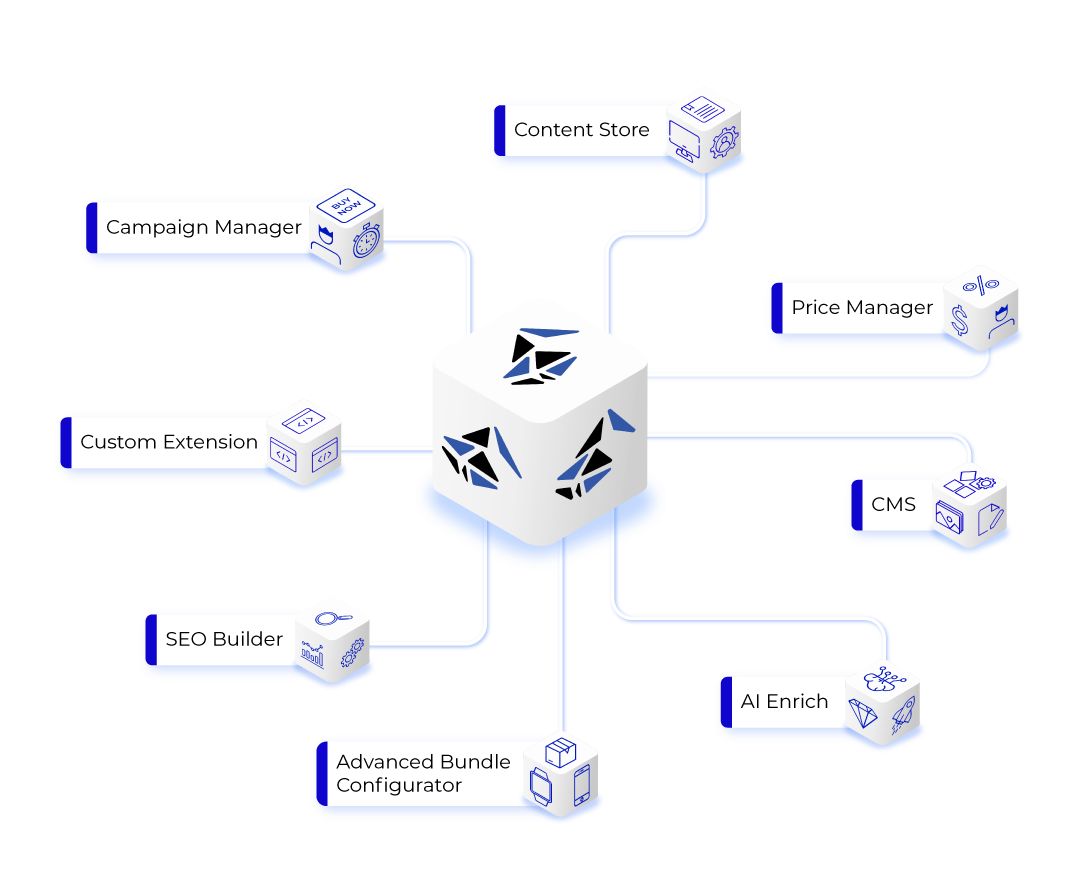
Extension Hub with ready connectors, plus a library for building custom extensions that run inside the PIM as native features. Custom solutions can also be built using the MCP.

Marketplace of apps, mostly 3rd-party connectors and external apps to use alongside the PIM.

AI capabilities
Native and unified: AI enrichment, translations, AI Agent, AI Automation in Rules Engine, AI DAM – available for all users.  AI data quality improvement as extension. 
Mostly generative AI features within PIM, some available in higher tiers or add-ons.
Agentic UI & capabilities
AI Agent turns natural-language requests into executed tasks: attribute changes, bulk actions, smart queries, in-context guidance, all within a friendly chat in the PIM. 
Data Architect Agent only, assists with initial data model setup, not ongoing daily operations or task execution.
MCP maturity
Exposing 700+ headless endpoints as MCP tools, Bluestone PIM enables AI to directly orchestrate microservices and execute tasks via natural language. 
MCP Server available but early-stage, a bridge over existing REST/GraphQL APIs with basic tools (get/upsert products, families, attributes). 
Collaboration
Built-in tasks, comments & notifications on product records – no email or Slack needed.
Multi-tier approval workflows, which can feel limiting for large multi-company orgs.
Pricing structure 
Pay-for-what-you-use. No hidden implementation fees. No surprise renewal increases.
Tiered pricing. Enterprise features require expensive upgrades. Total cost often only emerges after months of negotiation.

See How Bluestone PIM Compares With Your Own Data

The best way to evaluate a PIM is with your own products, your own team, and your own use cases.

Book a personalised demo and Bluestone PIM expert will walk through the features that matter most to your organisation.

Frequently Asked Questions

1 - What is the best alternative to Akeneo PIM?

Bluestone PIM is the best alternative for teams that need genuine API-first architecture, built-in AI, and transparent pricing. With 700+ API endpoints, MACH certification, and AI included in every plan, Bluestone PIM covers what Akeneo charges extra for. Gartner® lists Bluestone PIM as a Representative Vendor in their 2025 PIM Market Guide.
2 - How does Akeneo pricing compare to Bluestone PIM?

Akeneo plans cost €40,000 to €100,000+ annually, plus fees for extra features. Missing features and usage limits in the Growth and even Advanced tiers may force rapid, costly upgrades.

Bluestone PIM charges on a usage-based model. Features that Akeneo locks behind higher tiers (data completeness scoring, verification workflows, advanced permissions, asset history and versioning) come standard in every Bluestone PIM plan.

3 - Is Akeneo Community Edition still supported?

Akeneo Community Edition v7 support ends September 2026. After that date, there will be no security patches, bug fixes, or marketplace extensions. Self-hosted users need to migrate to Akeneo's paid tiers, fork the codebase, or switch to an alternative PIM.

4 - Can I migrate from Akeneo to Bluestone PIM?

Yes. Bluestone PIM offers a structured migration path: data audit, field mapping, API-based import (700+ endpoints make this programmatic, not manual), validation with AI-assisted quality checks, and go-live. Typical implementation takes around three months.

5 - What is the difference between Akeneo and Bluestone PIM?

The core difference is architecture. Bluestone PIM was built API-only from day one. Akeneo evolved from an open-source monolith into SaaS. This means Bluestone PIM has full API coverage (700+ endpoints vs limited coverage in Akeneo), built-in AI across all workflows, native MCP support for AI agents, and a flexible data model configurable without developers.

6 - Does Bluestone PIM support Digital Product Passports?

Yes. Bluestone PIM has built-in Digital Product Passport workflows: supplier data collection, validation against ESPR requirements, and passport generation. This is a ready feature, not a roadmap item.

7 - How does Bluestone PIM integrate with Shopify, Magento, and SAP?

Bluestone PIM connects to Shopify, Magento, commercetools, SAP, Microsoft Dynamics, and other platforms through its 700+ API endpoints. Integrations use standard REST APIs with one-way or two-way data flows. Business teams manage publishing without IT tickets.
cube-1