
 Headless PIM
Retailers selling in more than two channels should choose an API-first approach for their product data. That’s Bluestone PIM’s recommendation. This article explains why, and when it isn’t worth it.
An API-first approach means every action in your product information management (PIM) system can be done by a program as well as a person. Anything your team clicks, a script or an AI agent can do too.
That decides how much of your team’s week goes on manual work.
What Does an API-First Approach Mean for a Retailer?
For a retailer, an API-first approach means no part of your product data work is locked behind a screen. Every action has an API endpoint: a web address a program can call to do one job, such as:
-
creating a product
-
updating a price
-
adding a translation
-
publishing to a marketplace
Many PIMs have an API, but only for some tasks, usually bulk import and export.
Everything else needs a person in the interface. In an API-first PIM, everything you can do on screen, you can also do through the API.
| PIM with an API | API-first PIM | |
|---|---|---|
| What the API covers | Some tasks, usually bulk import and export | Every task you can do on screen |
| Does the vendor’s own interface use it? | No, it runs on a separate internal layer | Yes, the same public API |
| What you can automate | Only the pre-built tasks | Any task, by script or AI agent |
| Manual work as the catalogue grows | Grows with it | Stays flat once a task is automated |
| New channel or AI tool | Often needs custom development | Connects to the API you already have |
Bluestone PIM was built this way in 2016. It helps retailers sell in more channels by exposing every function through 1200+ task-level endpoints, the same API its own interface runs on. For a deeper look at the architecture, read how an API-first PIM works.

Download free e-book
Automation in Product Information Management
This e-book explains how automation works in product information management, which catalogue workflows can be automated today, and how an event-based architecture creates the foundation for the agentic PIM.
Four Questions to Ask Every PIM Vendor
If you’re choosing a PIM system, start here. Ask every vendor on your shortlist:
- Does your own interface run on your public API?
- Can you show me the API call for an obscure task, like changing a workflow step?
- Are your endpoints task-level, or only bulk import and export?
- Did your last three features ship with an API on day one?
Any “no” means some of your team’s work will always stay manual. For a full scorecard, use the API-first PIM evaluation checklist.
Why Can Merchandisers Now Automate Without a Developer?
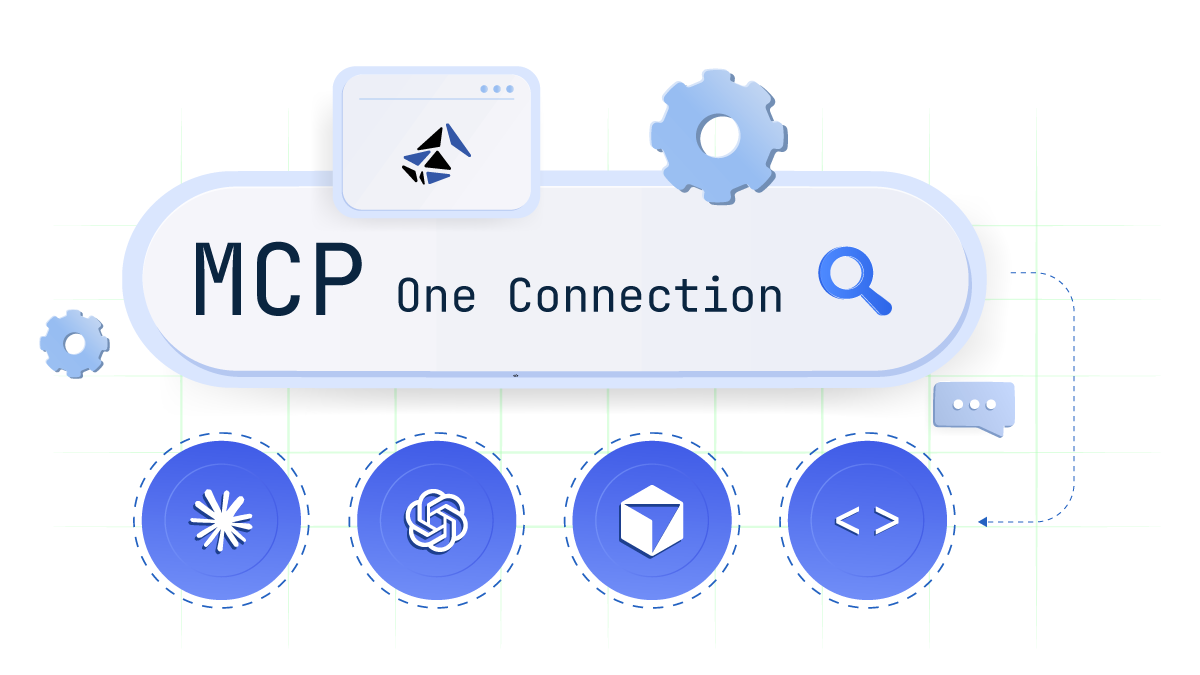
Merchandisers can now automate without a developer because of MCP (Model Context Protocol). Anthropic introduced this open standard in November 2024. It lets AI tools like Claude use a software’s API directly.
In an API-first PIM with an MCP server, the merchandiser describes the task and the agent makes the calls.
Morten Næss, Chief Product and Innovation Officer at Bluestone PIM, puts it like this:
"Our APIs were always there, but only developers could use them. Now, with MCP, anyone can"
Bluestone PIM’s MCP server works with any LLM, so your team can use Claude, ChatGPT or its own agent.
Before: A merchandiser spots 600 winter jackets missing care instructions. They raise a ticket. A developer writes a script and runs it two weeks later. The jackets sell without the data in the meantime.
After: The merchandiser asks an AI agent connected to the PIM to find the jackets and draft the instructions. The merchandiser reviews the drafts and approves them the same morning.
Here’s how Bluestone PIM MCP works in practice:
An agent can only do what the PIM’s API lets it do. If a task has no endpoint, the agent can’t touch it, and a person has to do it by hand.
In an API-first PIM, every task has an endpoint, so a retail team could hand an agent requests like these:
- “Translate the new autumn range into Swedish and Dutch for review.”
- “List products that are live on the webshop but missing from the marketplace feed.”
- “Check this week’s supplier file and flag anything that fails validation.”
With an API-first PIM, a new channel, app or AI tool connects to the API you already have. You don’t have to replace the PIM every three years.
In a few years, your catalogue can double and you can launch in new markets and channels.
If some jobs in your PIM can only be done by someone clicking through the interface, every new product and channel adds manual work.
With an API-first PIM, every job can be automated. You set the work up once, and it runs whether you have 10,000 products or 100,000.
Morten Næss says:
“An API-first platform is harder to build and run than one database behind a screen. Bluestone PIM paid that cost from day one, so when AI agents arrived, every function was already open to them, whichever LLM you use.”
When Is an API-First Approach Not Worth It?
An API-first approach isn’t worth it for a retailer with one sales channel, a small and stable catalogue, and no plans to automate.
If you sell a few thousand products only through your webshop, your e-commerce platform’s built-in catalogue tools will probably do the job for less money.
The case for API-first gets stronger as these increase:
- the number of channels and marketplaces you sell through
- the number of languages
- the number of suppliers sending you product data
- the share of your team’s week spent on repetitive data work
If two or more of those are growing, choose API-first now. Moving later costs more than moving early.