 Headless PIM
Your product catalogue will keep growing. Every year, you’ll be expected to manage more products across more channels.
There are two ways to keep up: keep adding people to the team, or make the system managing your product data do more of the work.
This is where a headless PIM comes in.
By letting your ERP, e-commerce platform, and all other systems work with the same product data through API endpoints, a headless PIM gives your team more ways to automate repetitive work.
In this article, we’ll explain what a headless PIM is and look at three ways it can help your team manage product data faster.
What Is a Headless PIM?
A headless PIM is a product information management system that separates the backend, where your product data lives, from the frontend, where that data appears.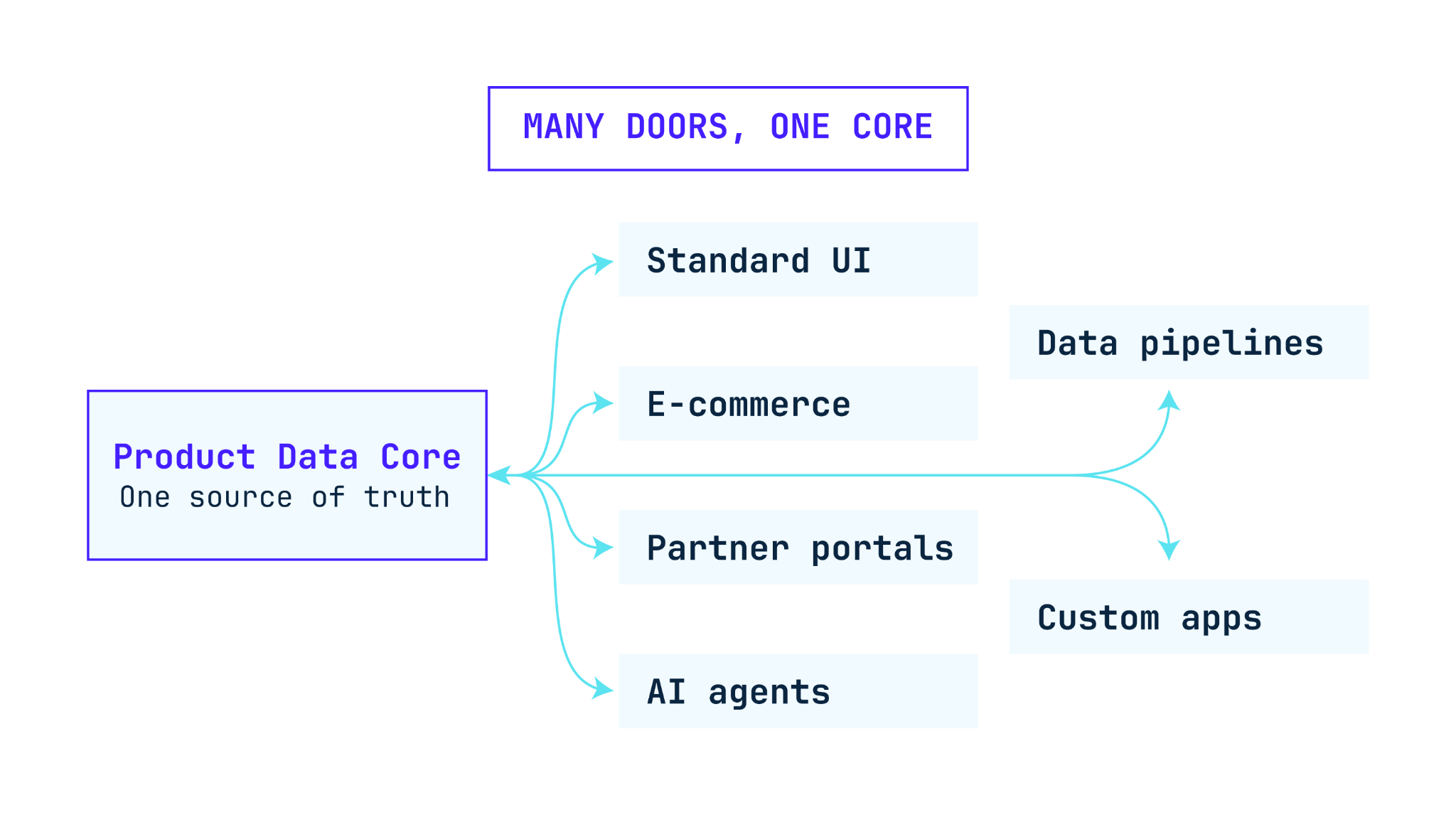
Here is the picture without the jargon:
A traditional PIM is one closed tool. Your product data lives behind one screen, and a person has to click to do anything.
A headless PIM keeps your product data open, so any system can plug in and the work runs itself. That difference is the whole story of why headless is faster.
The mechanism behind it is the API. An API is a doorway that lets one system ask another to do something.
When a PIM is API-first, every action, updating a price, adding a translation, publishing to a channel, can be triggered through that doorway by another tool, not only by a person clicking through a screen. That is why the data can move where it is needed without someone handling it by hand.
Bluestone PIM is built on this model. It's headless by design, with 700+ task-level API endpoints and full UI/API parity, something no other major enterprise PIM currently offers.
The systems you connect, the interfaces you build and the agents you run all work with the same product record through the same API layer.
What Do Headless, API-First and UI/API Parity Actually Mean?
These terms describe different parts of the architecture.
-
Headless means product data and business logic are separated from any fixed interface.
-
API-first means platform capabilities are built to be accessed programmatically from the start.
-
Full UI/API parity means every action available through the standard interface also has a machine-callable equivalent.
-
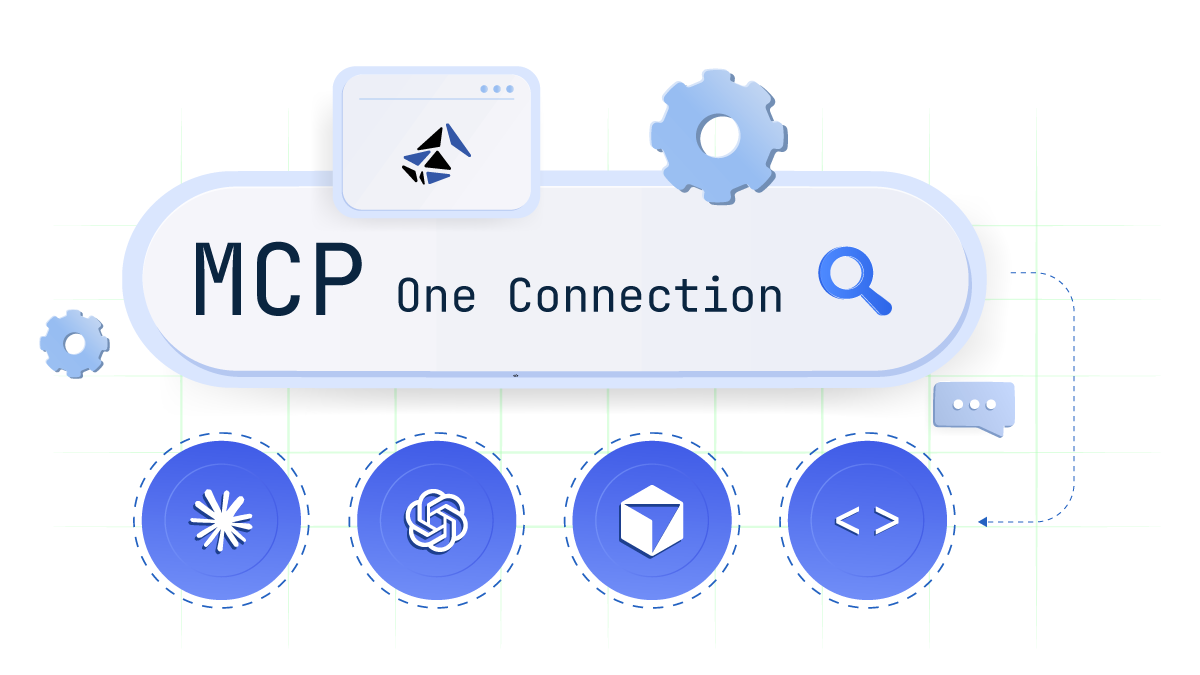
MCP, or Model Context Protocol, gives AI applications a standard way to discover and call tools made available to them.
-
Automation happens when APIs, workflows, rules or agents use those capabilities without requiring someone to perform every step manually.
-
That distinction becomes particularly useful when evaluating PIM platforms. A system can call itself headless and still expose only part of its functionality through APIs.
How Is a Headless PIM Different From a Traditional PIM?
The difference comes down to how you work with your product data.
With a headless PIM, the interface is just one way to access and manage your product data. Other systems, custom interfaces and AI agents can work with the same data and functionality through APIs.
With a traditional PIM, you typically work through the PIM’s interface.
With a headless PIM, the API is at the centre, so you can choose how you want to work with your product data. Here’s how I update product data without ever opening Bluestone PIM, using MCP (Model Context Protocol) with Claude:
Before, a change to a product spec meant opening the vendor's screen, editing the record, then repeating the update in every channel that didn't sync automatically.
After, you write the change once through the API and every connected channel reads the new value. That design also decides how fast you move.
Download free e-book
How to Modernise Your Product Data with Workflows and Automation
See how five manufacturers connect ERP, PLM and legacy systems to modern digital channels with a headless PIM, without replacing the systems they already rely on.
Below are the three things a headless setup makes possible. This is where the hours add up!
1. Build a Workspace for Every Role
Because the data is served through APIs, you can shape a workspace around each role instead of forcing everyone into one admin screen.
For example: Picture a translator working through a launch. A traditional PIM drops them into the full interface to hunt for the fields they need.
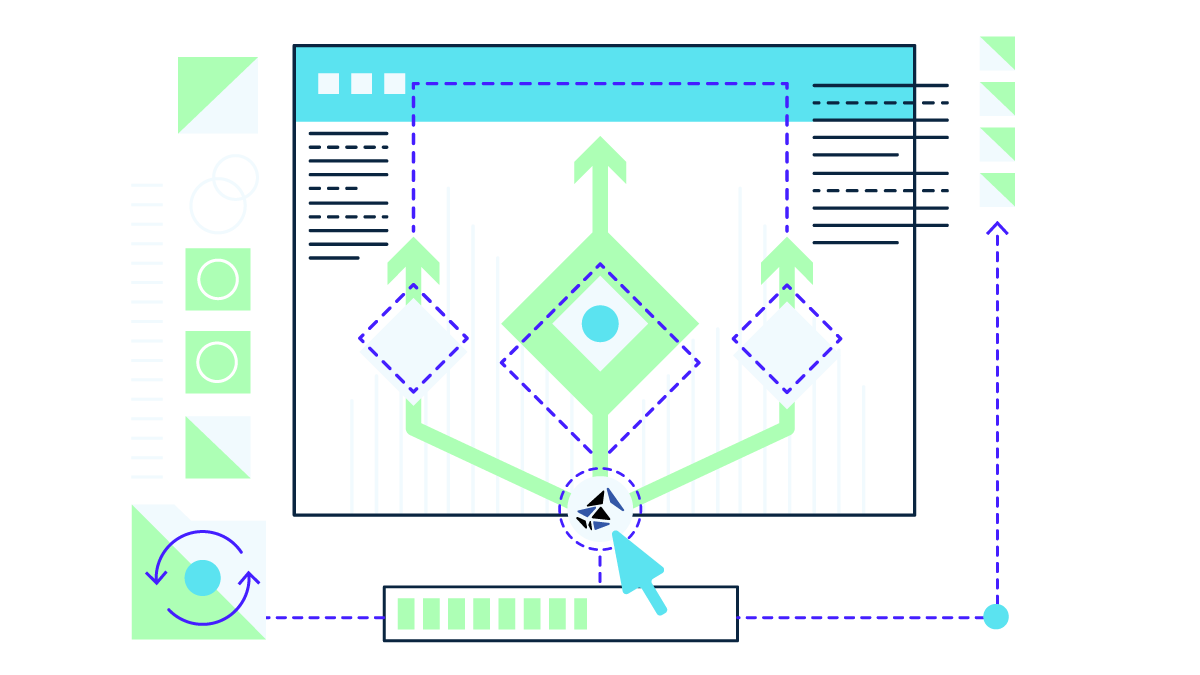
A headless PIM like Bluestone PIM gives them a lightweight workspace showing only the fields they need. They work faster and make fewer mistakes, because the screen holds nothing they don't need.
Here's what it looks like:
Want to see a role-based workspace on your own catalogue? Book a session with Bluestone PIM →
2. Update Product Data Across Every Channel at Once
You change the product once, and the update reaches every channel through APIs. That's the second thing a headless PIM does that a screen-bound system can't.
A headless PIM keeps a single source of truth for your product data. Update a spec or run a seasonal price change in the PIM, and the approved value can flow to your storefront, marketplaces and apps without someone retyping it for each channel.
The channels stay consistent because they all read from the same source!
The number of channels keeps rising. AI shopping assistants are one of them now, and they drop a product the moment its data looks incomplete.
McKinsey projects agentic commerce could drive up to $5 trillion in economic value by 2030, so keeping product data clean enough for machines to read is becoming a revenue question. If your SKU counts are climbing, our guide on how to scale SKU-heavy catalogues without duplication goes deeper.
3. Use Best-of-Breed Tools With a Headless PIM
A headless PIM fits naturally into a best-of-breed stack because the product data layer is separate from the systems that present or use that data.
You can use one platform for product information, another for search, another for commerce, and the frontend your team prefers. A typical setup might connect the PIM with an ERP, DAM, CMS, e-commerce platform, marketplace syndication tool and custom applications through API.
This gives you more freedom to change individual parts of the architecture as your needs change.
How Does a Headless PIM Help You Scale Without Adding Headcount?
A headless PIM with API-first approach helps you scale by automating repetitive product data work and making each update available across markets, languages, and channels from one place.
Your team can manage a larger catalogue without increasing headcount at the same rate.
Instead of adding people every time you enter a new market or launch more products, you can automate enrichment, localisation, validation, and distribution. Role-based workflows also let each team focus only on the work they need to do, while APIs connect your product data to every channel without manual copy-pasting.
The result is simple: more products, markets, and channels to manage without more people doing the same manual work.
Ready to Manage Product Data Faster?
The teams that scale without drowning in manual work have moved product data onto an architecture that does the repetitive work for them.
A headless PIM like Bluestone PIM gives your team role-based workspaces and one update that reaches every channel, on a stack you assemble to fit the business.
Bluestone PIM has 700+ API endpoints, which means 700 jobs your team can stop doing by hand. Want to see it on your own product data? Book a session with Bluestone PIM →