
 AI
AI
78% of consumers have used AI to research products at least once, according to a Bluestone PIM survey. That number will only grow as more shoppers turn to AI to discover products, compare options, and read reviews before they buy.
Bluestone PIM surveyed 201 consumers across age groups and purchase behaviours in March 2026 to find out how shoppers actually use AI, how much they trust it, and what would make them use it more.
The answers matter whether you are optimising for AI search results today or preparing for agentic commerce.
Here is what consumers said, and what retailers should do about it:
How many consumers are already using AI to research products?
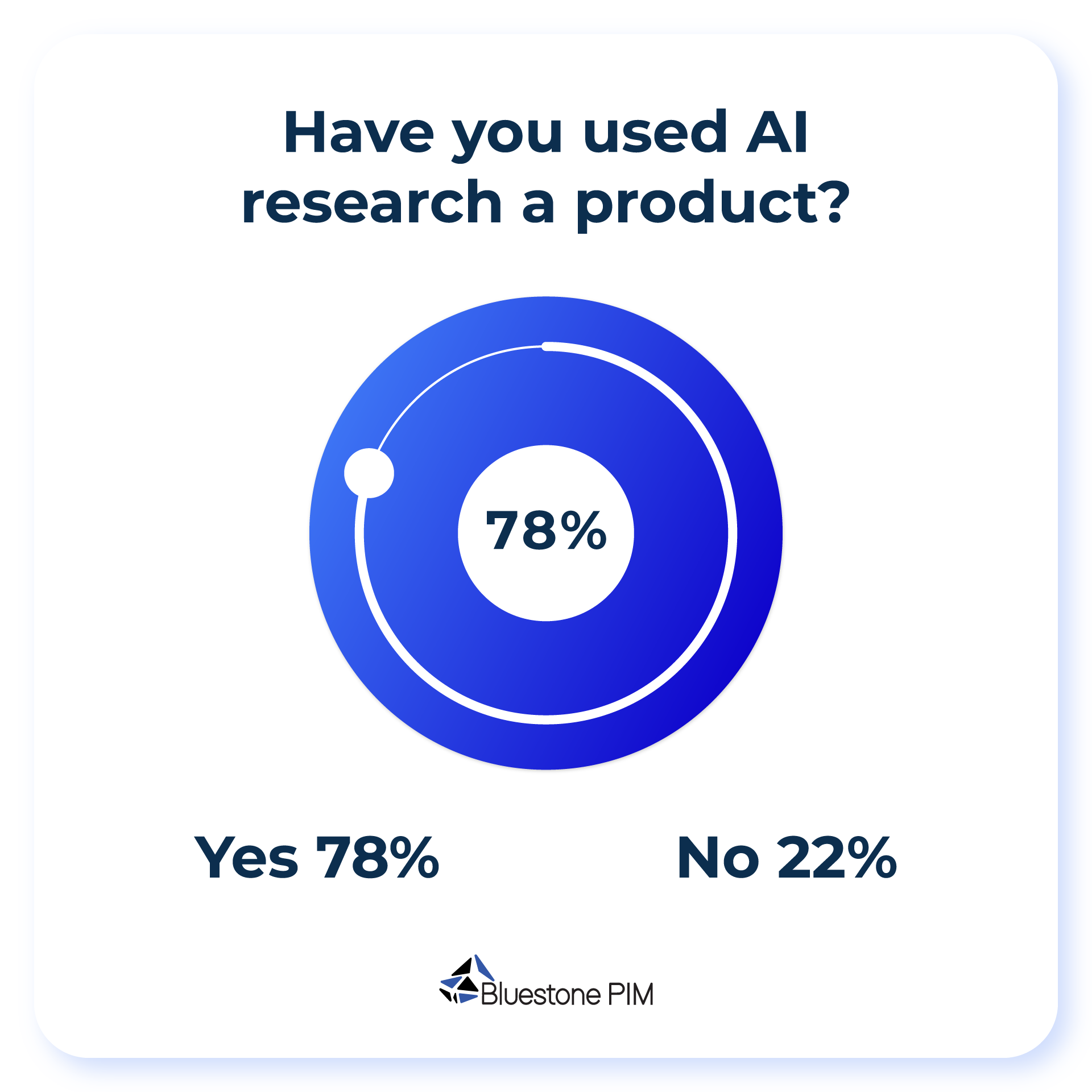
78% of respondents have used LLMs such as ChatGPT, Perplexity, or Claude to research a product, compare features, or find a gift.
How often they use it tells a different story.
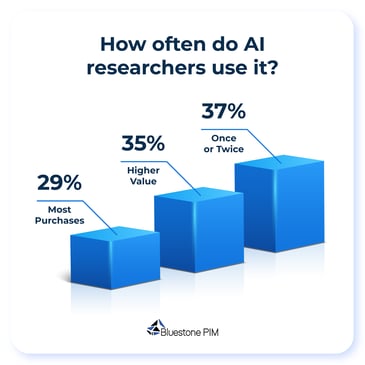
37% of those who used AI for shopping research have tried it once or twice. A further 35% use it only for higher-value purchases. 29% use it for most purchases.
AI is part of the research process, but it is not the default yet.
One respondent explained why they turn to AI:
For purchases where information on product pages is not entirely clear, I need to understand more nuanced information from customer reviews, forums, and blogs. For example, when buying a specific pair of shoes and wanting to understand how the model fits before ordering."
Every gap in your product information is a gap AI will fill with its best guess. It is also a reason for shoppers to leave your site and look elsewhere.
Do consumers trust AI recommendations more than traditional reviews?
Not yet.
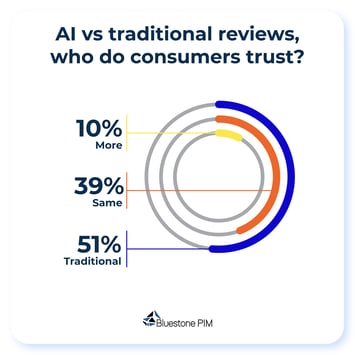
51% trust traditional reviews more than AI.
39% trust both about equally.
10% trust AI more.
When asked whether consumers trust AI recommendations to be neutral rather than influenced by paid advertising, only 3% said they fully trust AI neutrality. 68% assume results are commercially influenced to some degree.
For retailers, this points to a direct opportunity. AI cannot cite vague marketing claims. It can cite specific, verifiable facts: named certifications, verified reviews with correct schema markup, accurate specifications in labelled fields, and real availability data.
The retailers who structure their product information around facts rather than marketing language are the ones AI will recommend with confidence.
More on this in our guide:
Download free e-book
AI Visibility Guide for Retailers
Learn how to structure product data so AI can find, cite, and recommend your products. Covers GEO, agentic commerce, and 30+ data fields.
What do consumers actually want AI to prioritise?
The answer is not what most retail teams expect.
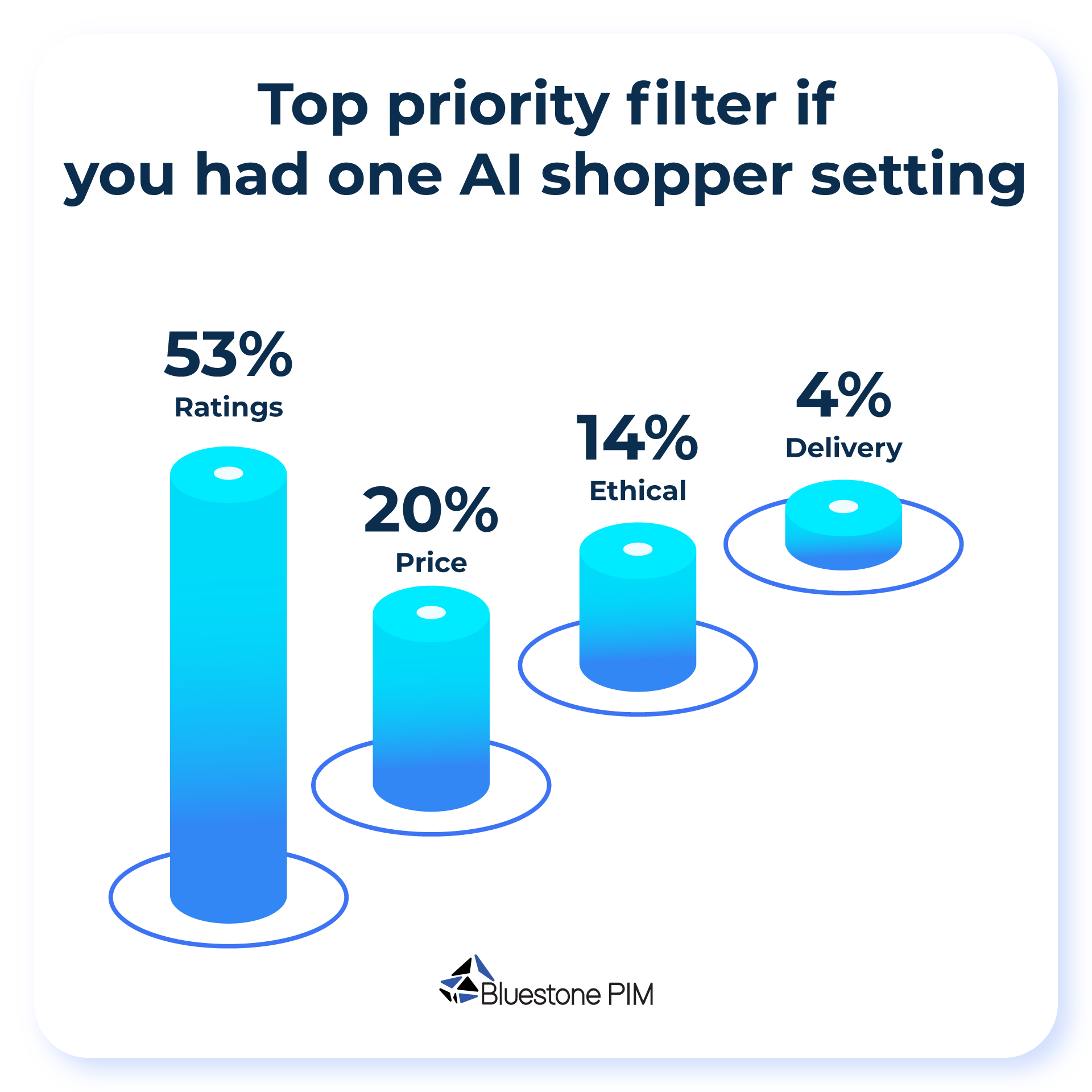
When asked to name their single priority for an AI shopping assistant, 53% chose strong customer ratings.
Price came second at 20%. Ethical or sustainable products came third at 14%.
The assumption that consumers just want the cheapest option does not hold. They want AI to find the best-reviewed product.
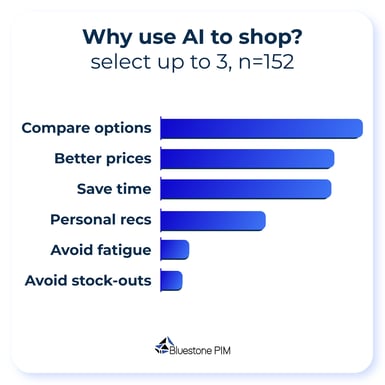
The reasons consumers would use AI to shop tell a consistent story. Comparing more options than they could check manually was the top reason, cited by 50% of respondents. Better prices came second at 41%. Saving time came third at 40%. Personalised recommendations came fourth at 26%.
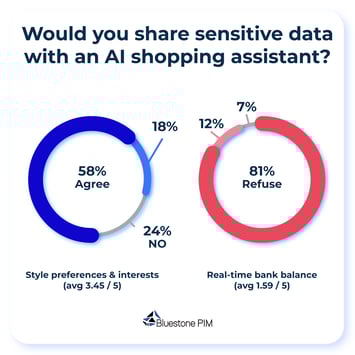
58% said they would share their style preferences and product interests with an AI assistant if it helped them find better products, better prices, or back-in-stock alerts.
Would consumers let AI complete a purchase on their behalf?
This is where enthusiasm drops sharply.
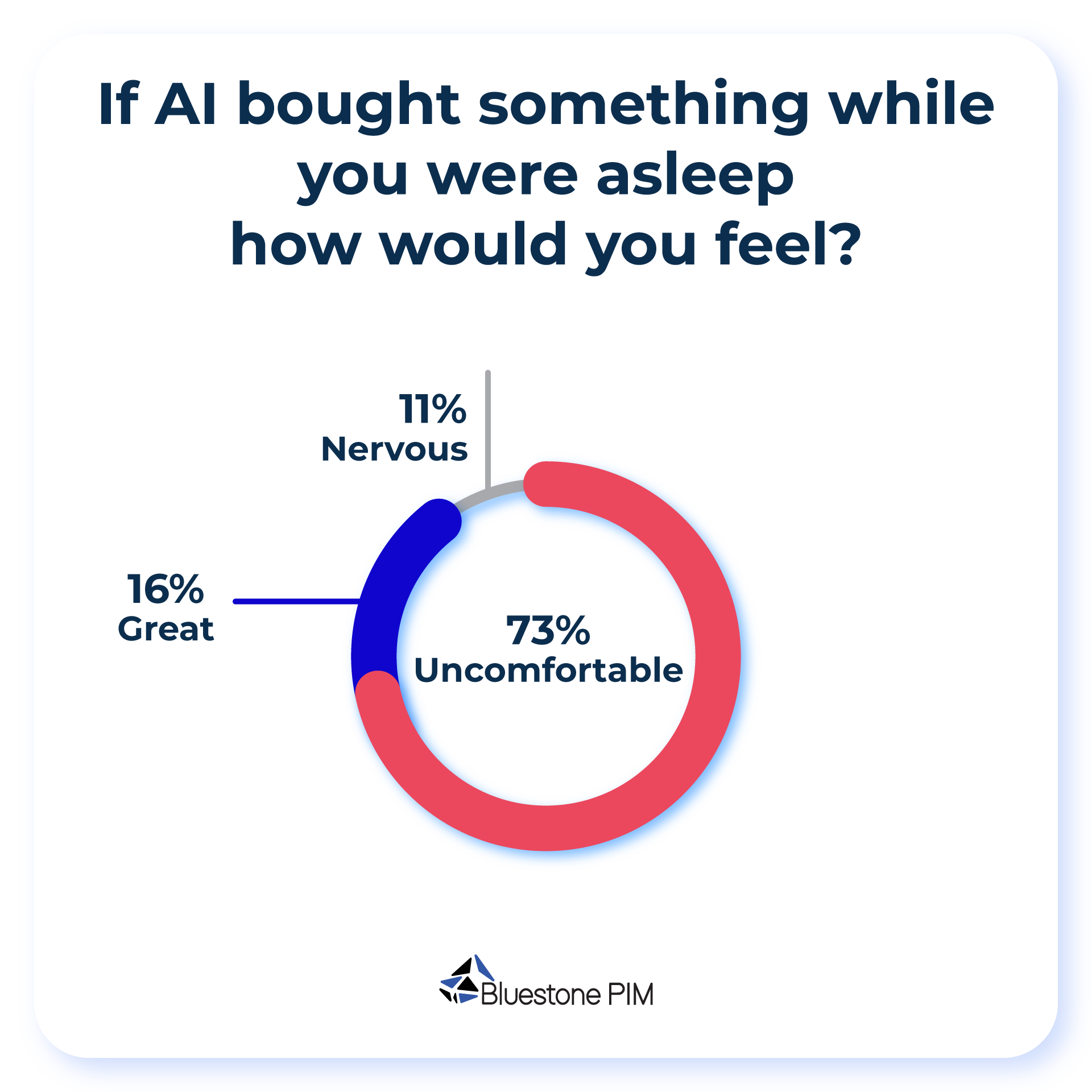
We asked respondents how they would feel if an AI assistant completed a purchase while they were asleep. 73% said they would be uncomfortable. 11% said they would feel nervous. Only 16% said they would feel great about it.
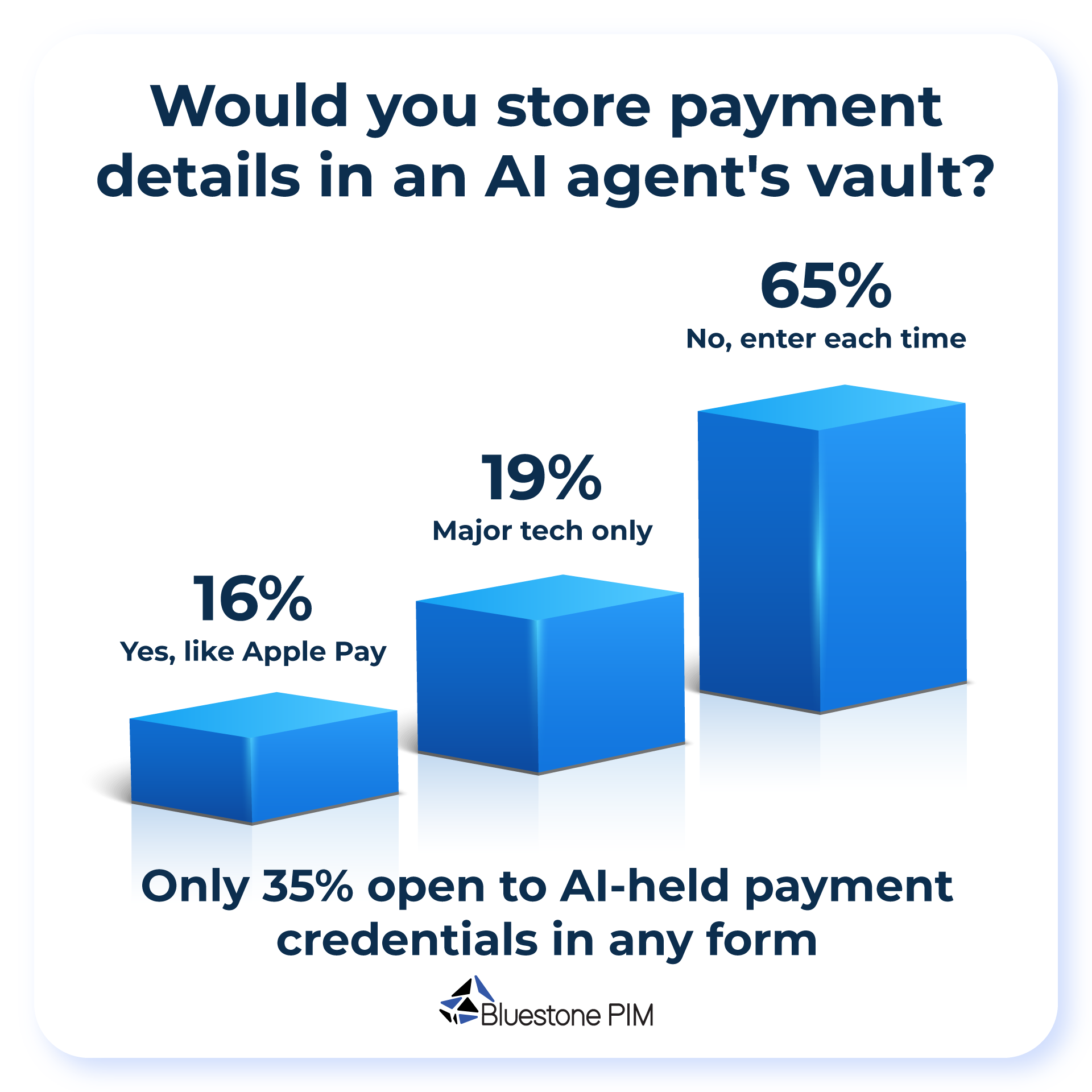
We then asked whether they would store their payment details in an AI agent's vault. 65% said no: they would prefer to enter their payment information manually each time. 19% said they would consider it, but only with a major tech provider such as Google. Just 16% said yes, comparing it to how they already save a card in Apple Pay or Google Pay.
Who is responsible when AI makes a purchasing mistake?
Consumers are not sure who to blame, and that confusion will matter more as AI shopping grows.
38% say the AI provider should fix an error. 29% say it is the customer's own problem. 26% say the retailer is responsible.
That last figure is the one retailers should pay attention to.
More than 1 in 4 consumers will hold the retailer accountable for a mistake the AI made, including buying the wrong size, the wrong product version, or an item that does not work with what the customer already owns.
The root causes are predictable: missing size guides, incomplete product options, and inaccurate specifications. These are the fields most commonly left empty or incorrect across product catalogues, and filling them is one of the most direct ways to prevent product returns.
Would blocking AI agents affect where consumers shop?
68% said they would still buy from a brand that blocked AI shopping agents.
But 20% would actively switch to a competitor that supports AI.
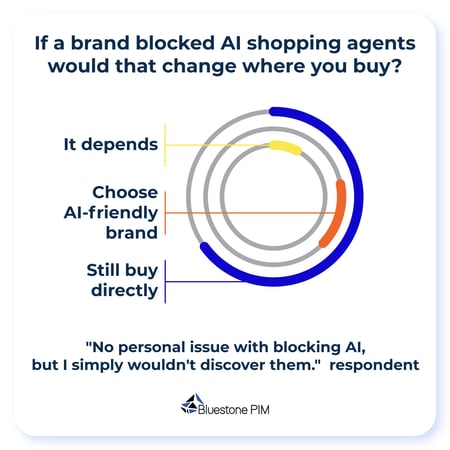
Several respondents explained they would not consciously switch: they simply would never find a brand that blocked AI agents in the first place. One put it plainly:
"If I'm researching and ask AI for a link to a specific site and it can't be scraped, I'm probably not going to go there."
Check that your site allows access to GPTBot, PerplexityBot, and ClaudeBot. Make sure your key product information is not hidden behind JavaScript, because most AI crawlers cannot read it. If you already run Google Shopping, you have the data foundation for AI commerce. Start there.
How should retailers prepare for AI shopping?
1
Start with your highest-value product categories, because that is where AI-assisted shopping research is already concentrated. According to the Bluestone PIM survey, electronics, outdoor gear, sports equipment, and appliances are the categories where shoppers already use AI most to research and compare products. Audit the product feeds for these categories first. Check how many specification fields are empty. Prioritise filling them in order of impact: specifications first, then Q&A blocks, then trust signals (customer reviews).
2
Add schema markup to your review data so AI can actually read it. The top consumer priority for AI shopping is strong customer ratings. Ratings that are not formatted with the correct schema markup (a small piece of code that labels your review data so AI can read and rank it) are invisible to AI systems filtering by ratings.
3
Your product feed is what AI reads. Treat it like a sales channel. AI agents pull product information from your structured data feed: pricing, availability, specifications, descriptions, Q&A blocks, and certifications. If your feed has gaps, AI cannot fill them with your website copy. Build your feed with the same care you give your product pages.
4
Comparison is the top reason consumers use AI to research products. AI can only compare specifications that exist as separate, labelled fields. If your specs are buried inside product descriptions, AI cannot extract them. Pull specifications out of your marketing copy and into their own fields.
5
A quarter of consumers would blame the retailer if AI helped them buy the wrong product. The most common causes: missing size guides, incomplete product options (colour, configuration), and inaccurate technical specifications. Retailers can act on this now. Audit your most-returned products for empty fields in these categories and fix them first. Every missing field is a wrong purchase waiting to happen.
6
Collect and structure sustainability data now, before EU regulations make it mandatory. 14% of consumers already rank sustainable products as their top AI shopping filter. EU ESPR regulations and the Digital Product Passport will make product sustainability data publicly available and machine-readable. When that happens, AI will use it as a ranking signal.