![How To Scale SKU-Heavy Catalogues Without Duplication [Guide For Retailers]](https://www.bluestonepim.com/hubfs/How-To-Scale-SKU-Heavy-Catalogues-Without-Duplication-1.png) Product Information Management
Product Information Management
Fashion e-commerce teams manage some of the most complex product catalogues in retail. A single jacket may exist in ten sizes, five colours, several fabric variations, and multiple markets. Managing that product information across e-commerce sites, marketplaces, stores, and marketing channels quickly becomes chaotic.
A PIM for fashion and apparel solves this problem by centralising product data and preparing it for every sales channel. Instead of updating spreadsheets, supplier portals, ERP systems, and websites separately, teams manage product information in one place and distribute it automatically.
For fashion brands selling online, a PIM software for the fashion industry such as Bluestone PIM improves catalogue accuracy, speeds up collection launches, and keeps product information consistent everywhere customers encounter the brand.
What Is PIM for Fashion and Apparel?
PIM for fashion and apparel is a Product Information Management system designed to manage complex clothing and accessory product data across multiple sales channels.
Fashion product catalogues contain far more attributes than many other industries. A typical clothing item may include:
-
size ranges and international sizing standards
-
colour variants
-
fabric composition and material certifications
-
care instructions
-
sustainability data
-
images, lookbooks, and videos
-
market-specific product descriptions
Without a PIM system, this information often lives in different places: supplier spreadsheets, ERP systems, Digital Asset Management platforms, and marketing tools.
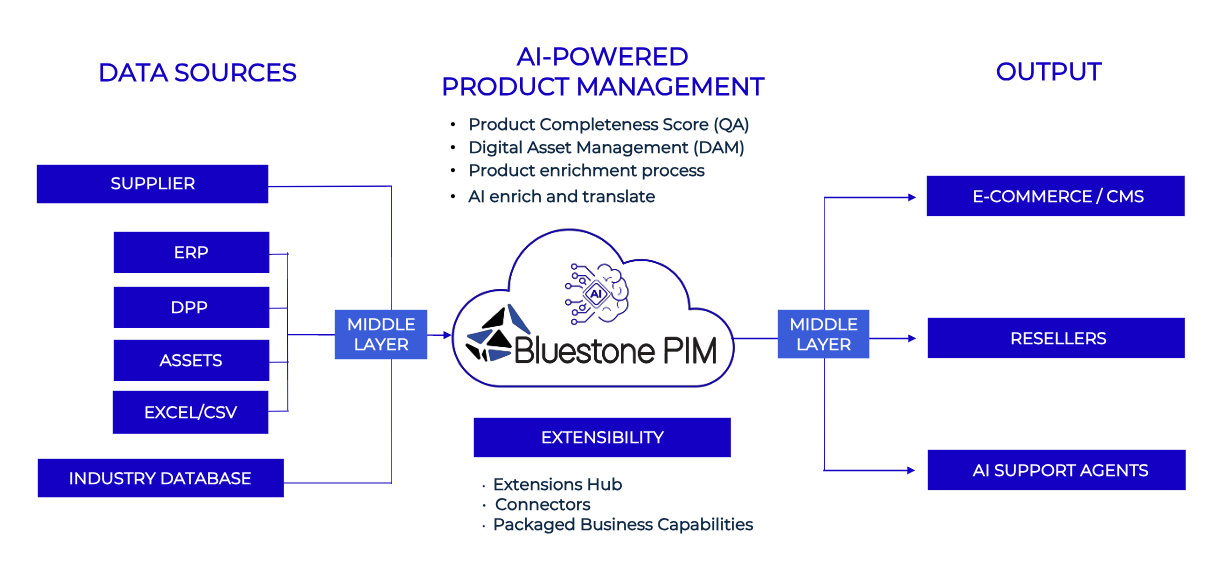
A PIM platform centralises all this information and prepares it for customer-facing use. The system structures product data, enriches it with additional attributes and media, and distributes it to websites, marketplaces, and other digital channels.
For fashion retailers managing thousands of SKUs, PIM becomes the foundation of product data management.

Download free e-book
AI Visibility Guide for Retailers
Learn how to structure product data so AI can find, cite, and recommend your products. Covers GEO, agentic commerce, and 30+ data fields.
How Does a PIM System Improve Product Data Accuracy for Fashion Online Stores?
A PIM system improves product data accuracy by centralising product information, validating attributes, and monitoring product completeness before publishing.
Fashion retailers frequently deal with inconsistent product information coming from suppliers, manufacturers, and internal teams. Without governance, errors appear quickly:
- incorrect size charts
- mismatched product images
- missing material composition
- inconsistent descriptions across channels
A PIM platform addresses these problems in several ways.
1. Centralised Product Data
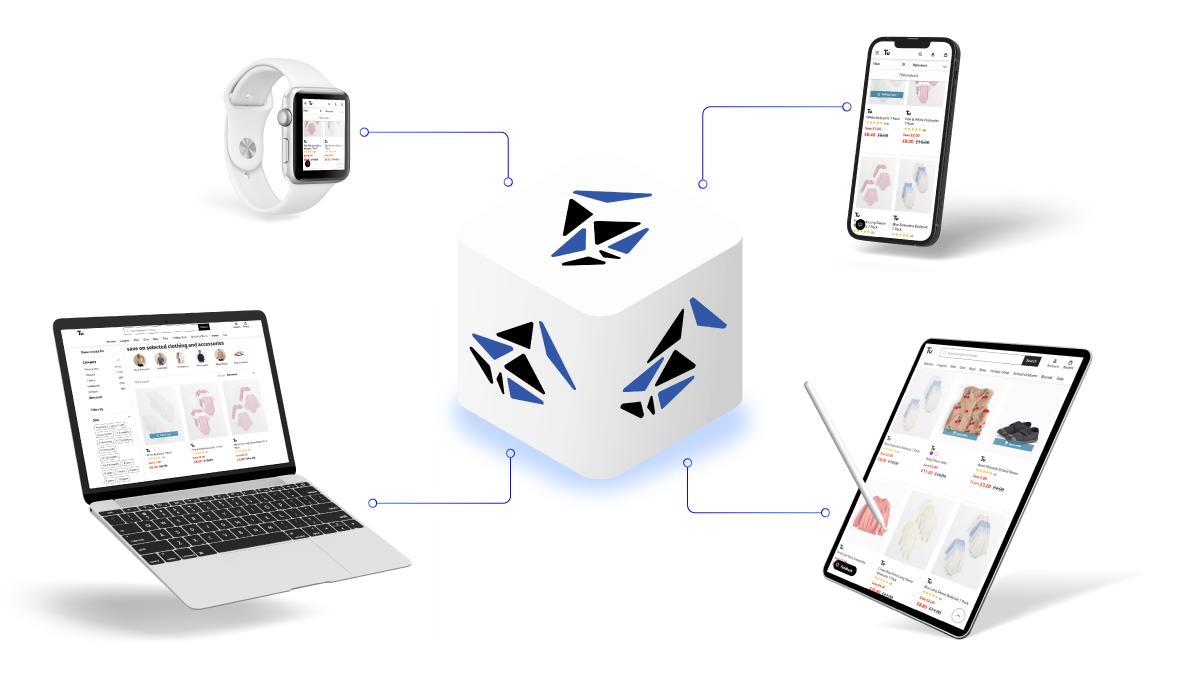
A PIM acts as the single source of truth for product information. Instead of updating multiple systems separately, teams manage product attributes and content in one place. Updates then propagate automatically across sales channels.
This prevents conflicting product data across websites, marketplaces, and retail systems.
2. Attribute Validation
Fashion PIM software such as Bluestone PIM enforces rules before products go live.
Example validation rules may include:/p>
- every garment must include fabric composition
- every product must have at least three images<
- footwear products must include a size range
roducts that fail these checks cannot be published.
3. Product Completeness Tracking
Bluestone PIM system provide completeness dashboards. These show product teams exactly which attributes or assets are missing. This is particularly useful when launching new seasonal collections containing hundreds of SKUs.
It also has a direct impact on reducing product returns in fashion. When key information such as size guides, fit details, material composition, and product images is complete and consistent, customers have a clearer understanding of what they are buying. This reduces common return reasons like incorrect sizing or unmet expectations.
By ensuring every product meets defined completeness standards before going live, fashion retailers can improve customer confidence and lower return rates.
What Should I Look for in a PIM Solution for a Multi-Brand Fashion Retailer?
A PIM solution for a multi-brand fashion retailer must support flexible product models, brand-specific content, and scalable integrations.
Retailers managing multiple brands face additional complexity. Each brand may require different product attributes, tone of voice, and marketing assets.
Several capabilities are especially important.
Flexible Product Data Models
Different fashion categories require different attribute sets.
| Category | Typical Attributes |
|---|---|
| Apparel |
|
| Footwear |
|
| Accessories |
|
A strong fashion PIM such as Bluestone PIM allows each category to define its own attribute model.
Brand-Specific Content Management
Multi-brand retailers often maintain different content styles.
Example:
- a luxury fashion brand uses storytelling descriptions
- a sportswear brand focuses on performance specifications
A PIM should allow separate content structures for each brand and market.
Supplier Collaboration
Many retailers receive product data from dozens of suppliers. A PIM platform should support supplier portals or structured imports so partners can upload product information directly into the catalogue workflow.
It should also streamline supplier onboarding, making it easy to bring new partners into the process without lengthy setup. This includes standardised templates, clear data requirements, and guided workflows that help suppliers provide complete and consistent product information from the start.
A well-structured onboarding process reduces back-and-forth communication, shortens time to market, and improves overall data quality across the catalogue.
Watch the video to see how to onboard supplier data into a Bluestone PIM system using three proven methods.
Which PIM Platforms Are Most Popular for Managing Large Fashion Catalogues?
Fashion retailers managing large product catalogues require PIM platforms designed for scalability, automation, and flexible integrations.
Large fashion catalogues often include:
- thousands of SKUs
- complex variant structures
- large media libraries
- frequent seasonal updates
A modern PIM platform should support large product data volumes while maintaining strong performance and governance.
Bluestone PIM is designed for fashion retailers managing complex product data at scale. Its architecture is headless by design and agent-first by architecture: MACH-certified and cloud-native, so it integrates with e-commerce platforms and content systems without platform lock-in. Composable architecture is part of that foundation, but the bigger shift is what it enables. AI agents can work through the same API that powers Bluestone PIM's own interface. They handle onboarding and enrichment work that used to sit with your team.

Download free e-book
Automation in Product Information Management
This e-book explains how automation works in product information management, which catalogue workflows can be automated today, and how an event-based architecture creates the foundation for the agentic PIM.
What Are the Leading PIM Systems for Fashion E-commerce Businesses in the UK?
Leading PIM systems for fashion e-commerce businesses in the UK must support complex catalogues, localisation, and integrations with modern commerce platforms.
UK fashion retailers operate in highly competitive digital markets where product data quality directly influences customer experience.
A strong fashion PIM platform supports:
- multilingual product content
- localisation for regional markets
- integration with marketplaces and retail channels
- scalable product data models
Bluestone PIM supports these requirements for fashion brands operating across multiple markets. Composable architecture and flexible product modelling are the foundation, but for UK teams selling across regions, the real advantage is what AI agents can do with that foundation: translate and localise content automatically, instead of leaving it for someone to fill in by hand.

Download Case study
How Zeeman Cut Product Localisation from 6 Weeks to 1
Zeeman textielSupers B.V. aimed to modernise their e-commerce stack and reduce dependency on legacy systems. Using Bluestone PIM’s MACH-based platform they transformed product data operations and optimised their customer buying journey foundations.
Download Case Study hereWhat Are the Best PIM Solutions for Fashion E-commerce With Complex Product Attributes?
The best PIM solutions for complex fashion catalogues support flexible product modelling, variant management, and automation.
Fashion products require highly structured product data. A single item may include:
- parent products with dozens of variants
- multiple sizing standards
- multilingual descriptions
- sustainability and compliance attributes
Legacy product management systems often struggle to manage this level of complexity.
Modern PIM platforms address this with:
- category-specific attribute models
- advanced variant grouping
- localisation workflows
- automation and AI-driven enrichment
Bluestone PIM includes built-in generative AI features that help teams generate product descriptions, translate content, and analyse catalogue data quality.
These capabilities significantly reduce the manual effort required to manage large fashion catalogues.

Which PIM Software Offers the Most Robust Features for Fashion Product Enrichment?
PIM software built for fashion product enrichment combines automation and AI content generation with strong digital asset management.
Product enrichment is one of the most time-consuming tasks for fashion product teams. Each item needs attributes, images, descriptions, and marketing content.
Modern PIM platforms provide enrichment tools such as AI-generated product descriptions, automated translations for international markets, attribute suggestions based on product categories, and image recognition for product tagging.
These tools help teams enrich large catalogues quickly, while people keep final say over what ships. That's the model Bluestone PIM is built around: agents draft and suggest, teams approve.
Easiest PIM Systems to Implement for a Growing Fashion E-commerce
The easiest PIM systems to implement for fashion companies are cloud-native platforms that integrate easily with modern commerce tools. Growing fashion brands should prioritise intuitive interfaces and scalable data models over heavy customisation. Cloud-native systems remove the need for infrastructure management, so businesses scale product catalogues without replacing the underlying platform later.
Bluestone PIM is built for this. It's headless by design and agent-first by architecture: the same API that powers Bluestone PIM's own interface connects to commerce platforms and marketplaces, and lets AI agents run the day-to-day work of supplier onboarding, enrichment, validation, and publishing. Teams structure product data and enrich content once. Agents handle the repetitive work across every channel, without long implementation projects or custom development.
Want to see how this works for your catalogue? Talk to the Bluestone PIM team to explore how a headless, agent-first PIM platform can simplify product data management and support your e-commerce growth.