 Product Information Management
Time is running out for companies still relying on SAP Hybris PCM, which will reach end-of-life on July 31, 2026.
This transition point is crucial for organisations relying on these legacy systems, as it presents both significant risks and opportunities.
With the increasing demand for omnichannel experiences and agile supply chains, outdated monolithic systems like SAP Hybris PCM are becoming a burden rather than an asset.
Download free e-book
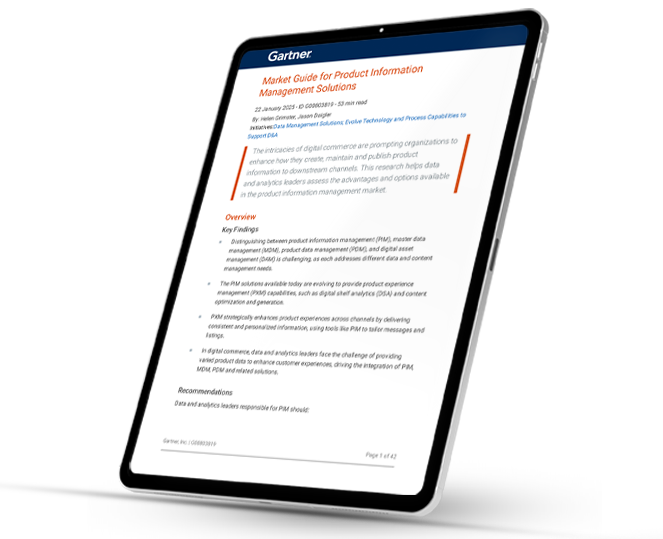
Gartner® Market Guide for Product Information Management Solutions
The 2025 Gartner® Market Guide for Product Information Management is a trusted resource for business and tech leaders who want to make a confident decision about their PIM solution.
Understanding the SAP Hybris EOL Impact
Let’s have a closer look at the details related to the SAP Hybris product.
Introduction to SAP Hybris E-Commerce
SAP Hybris is a commerce platform designed to support customer experience management across multiple channels.
As part of SAP’s Customer Experience (CX) suite, it provides a unified architecture that connects core business areas such as marketing, sales, service, and commerce.
The platform’s API-driven framework allows organisations to develop personalised and context-aware interactions with their customers.
With SAP Hybris, companies can manage commerce operations more efficiently, maintain consistency across digital and physical channels, and adapt to changing customer expectations. It also offers tools for gathering customer insights and optimising engagement strategies within the broader commerce ecosystem.
However, with SAP Hybris PCM (Product Content Management) scheduled to reach its end of life on July 31, 2026, businesses relying on the platform should begin planning their next steps.
This transition period presents an opportunity to evaluate modern alternatives that can offer improved flexibility, scalability, and long-term support.
What Does Hybris Platform PCM End-of-Life Mean for Software?
When software reaches its EOL, the vendor ceases support, updates, and security patches.
For SAP Hybris PCM users, this means that after 31 July 2026, systems will be vulnerable to security threats, compatibility issues, and operational inefficiencies.
Risks of Continuing with an EOL System

Security Vulnerabilities
Without updates, systems become prime targets for cyberattacks.

Compatibility Issues
Outdated platforms may struggle to integrate with modern technologies.

Increased Costs
Maintenance becomes costly due to frequent fixes and workarounds.

Reduced Functionality
EOL systems may lack features needed to meet market demands.

Regulatory Compliance
Outdated software may not meet current regulations, risking legal repercussions.
So if your organisation is facing technological obsolescence, scalability issues, security vulnerabilities, or poor user experiences, then you know it's time to consider re-platforming to a modern commerce architecture.
The Shift from Monolithic Systems to Modern Commerce Architectures
Why Monolithic Systems Fall Short
Traditional monolithic systems like SAP Hybris bundle all functionalities into a single, rigid codebase. While effective in their time, these architectures now hinder businesses in the fast-paced commerce environment due to their inability to adapt quickly to market changes.
So, what’s the alternative?
Enter the MACH principles—the key to building a flexible, agile commerce architecture that empowers businesses to tailor their technology stack to meet changing business requirements.
Microservices
Independent services that can be developed, deployed, and scaled individually.
API-First
Seamless integration between services and platforms.
Cloud-Native
Scalability, flexibility, and cost efficiency.
Headless
Separation of front and back ends for a customisable user experience.
These principles are the foundation of composable commerce, allowing businesses to create a tailored, agile system by selecting the best technologies to meet their needs.
Buy AND Build: A Blueprint for Composable Commerce
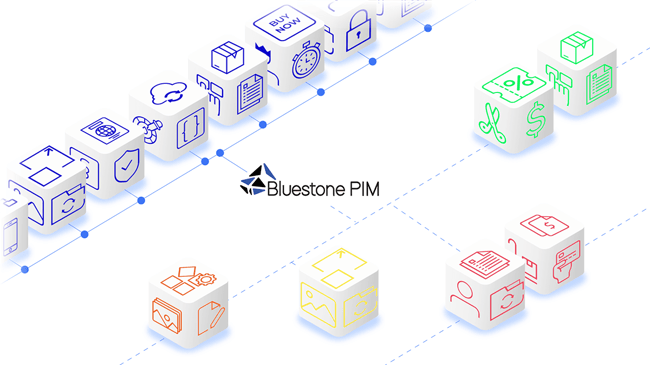
Legacy systems forced companies to buy OR build, but composable commerce enables both. The Buy AND Build model lets businesses:
- Buy: Adopt proven SaaS products (e.g., Bluestone PIM, payment gateways, Customer Relationship Management, search)
- Build: Customise unique features with in-house development or microservices
Advantages of MACH-driven composable commerce:
- Avoid vendor lock-in
- Swap or upgrade individual components with minimal risk
- Innovate faster and cut total cost of ownership
-
Create a tailored, future-proof stack for e-commerce
Centralised Product Information — The Foundation of Composable Commerce
When planning your composable commerce solution, begin with your product information.
Centralising product data in a Product Information Management (PIM) system creates a single source of truth, streamlining sales and marketing efforts.
This solid foundation allows for effective integration of other composable components, ensuring your product data remains accurate and accessible across all channels.
Download free e-book
Complete Guide to PIM
This free guide walks you through everything you need to know about modern Product Information Management (PIM) and how to use it as a foundation for growth.
How Bluestone PIM Can Support Your Transition
Bluestone PIM is designed to support your transition to composable commerce by providing robust product content management, a proven MACH-certified platform and a wide range of pre-built extensions and connectors.

Improve Product Content Management
Bluestone PIM excels at centralising product data, managing catalogues and ensuring data quality across all channels. It also offers AI-powered tools for automated workflows and advanced collaboration features.

Enterprise-Ready MACH Platform
Bluestone PIM, the first MACH Alliance-certified solution, offers a flexible, scalable platform with over 700 APIs. It’s a tested, enterprise-grade option, minimising risks compared to newer alternatives.

Seamless Integrations
Bluestone PIM’s hub of extensions, integrations, and solutions partners, including collaboration with leading providers such as Cloudinary, Algolia, Productsup and commercetools, ensures seamless transitions and enhanced functionality.
Now is the time to transition from legacy systems to composable commerce with Bluestone PIM, offering flexibility and freedom from vendor lock-in.
Download free e-book
Features Overview: Still comparing PIM platforms in 47 open tabs?
Get the full Bluestone PIM features breakdown in one document: data modelling, channel syndication, digital assets, AI automation explained in plain language.
Modernising for Growth: UK’s Top 5 Supermarket’s SAP Hybris Overhaul
With a growing product portfolio, a leading UK supermarket chain needed to modernise its outdated SAP Hybris PIM system.
The company implemented Bluestone PIM’s composable solution, which has over 700 API endpoints for seamless integration and unlimited scalability. The new architecture has significantly increased operational efficiency and positioned the company for sustainable growth.
Read the case study: From SAP Hybris to Composable PIM: How a Leading UK Supermarket Transformed Its Digital Operations
Elevate Your Business with a Composable MACH Architecture
To remain competitive today, it is not enough to maintain the status quo. Legacy systems such as SAP Hybris can no longer meet modern requirements and are increasingly exposing companies to considerable risks. Moving to a composable commerce platform built on the MACH architecture, such as Bluestone PIM, offers the flexibility, scalability and innovation you need to succeed.
To ensure a smooth migration from legacy systems like SAP Hybris PCM, you can follow our 4-step migration strategy to navigate the transition with confidence and ease.
Get in touch with us to learn more or book a demo to see how our MACH-based PIM solution can streamline your transition from legacy systems, improve your digital infrastructure and fuel your growth.