

 Product Information Management
The electronics industry is entering a new era of transparency, traceability, and accountability.
Under the EU’s Ecodesign for Sustainable Products Regulation (ESPR), many electronic and electrical products will soon require a Digital Product Passport (DPP) to be sold in the European market.
For electronics manufacturers, brand owners, and retailers it is a structural shift in how product data is created, managed, and shared across the entire lifecycle, from raw materials and components to repair, reuse, and recycling.
This guide explains what the Digital Product Passport for electronics means, who is affected, when it applies, and how to implement it in practice.
What Is a Digital Product Passport for Electronics?
A Digital Product Passport (DPP) is a digital identity for each electronic product model and, in some cases, each individual unit.
It will provide structured, verified data on:
-
Component origin and manufacturing sites
-
Bill of materials and substances of concern
-
Energy use and environmental footprint
-
Repairability, firmware support, and spare part availability
-
Safety and conformity documentation
-
Recycling and end-of-life handling
The DPP is accessed through a QR code or data carrier on the device, packaging, or manual.
Once scanned, the passport opens a digital product page where regulators, customs authorities, service technicians, and consumers can instantly view the data.
Why Electronics Are High on the ESPR Priority List
Electronics generate some of the fastest-growing waste streams in Europe. They contain critical raw materials, rare earths, and hazardous substances, while often being difficult to repair or recycle.
The DPP is designed to:
-
Improve traceability of components and materials
-
Support right-to-repair initiatives
-
Enable customs verification of compliant products
-
Reduce waste through better reuse and recycling
-
Enforce sustainability claims with real data
As ESPR is implemented, many electronic products placed on the EU market are expected to require Digital Product Passport–ready product data.

What Data Will Electronics DPP Require?
Although product-specific acts are still being finalised, every electronics Digital Product Passport should:
-
Link to a unique product identifier via QR code or RFID
-
Be displayed on the product or packaging
-
Use open, non-proprietary standards
-
Store data in a machine-readable, structured, interoperable format
-
Be searchable and aligned with international data standards
Energy-Related Products And Digital Product Passports
Energy-related products that already fall under the EU Energy Labelling framework may not require a separate standalone Digital Product Passport, as relevant information is currently managed through the European Product Registry for Energy Labelling (EPREL). How EPREL and future Digital Product Passport requirements will interact is expected to be clarified further as delegated acts are published.
Bluestone PIM already supports organisations that manage energy-labelled products through its Energy Label extension, enabling structured integration with EPREL data and synchronisation of official EU energy labels and efficiency information across digital channels. This ensures consistency between regulatory records and customer-facing platforms.
At the same time, Bluestone PIM continuously monitors regulatory developments under ESPR. As Digital Product Passport requirements for electronics become more clearly defined, the platform’s structured data model and API-first architecture are designed to accommodate additional DPP attributes and publishing needs.
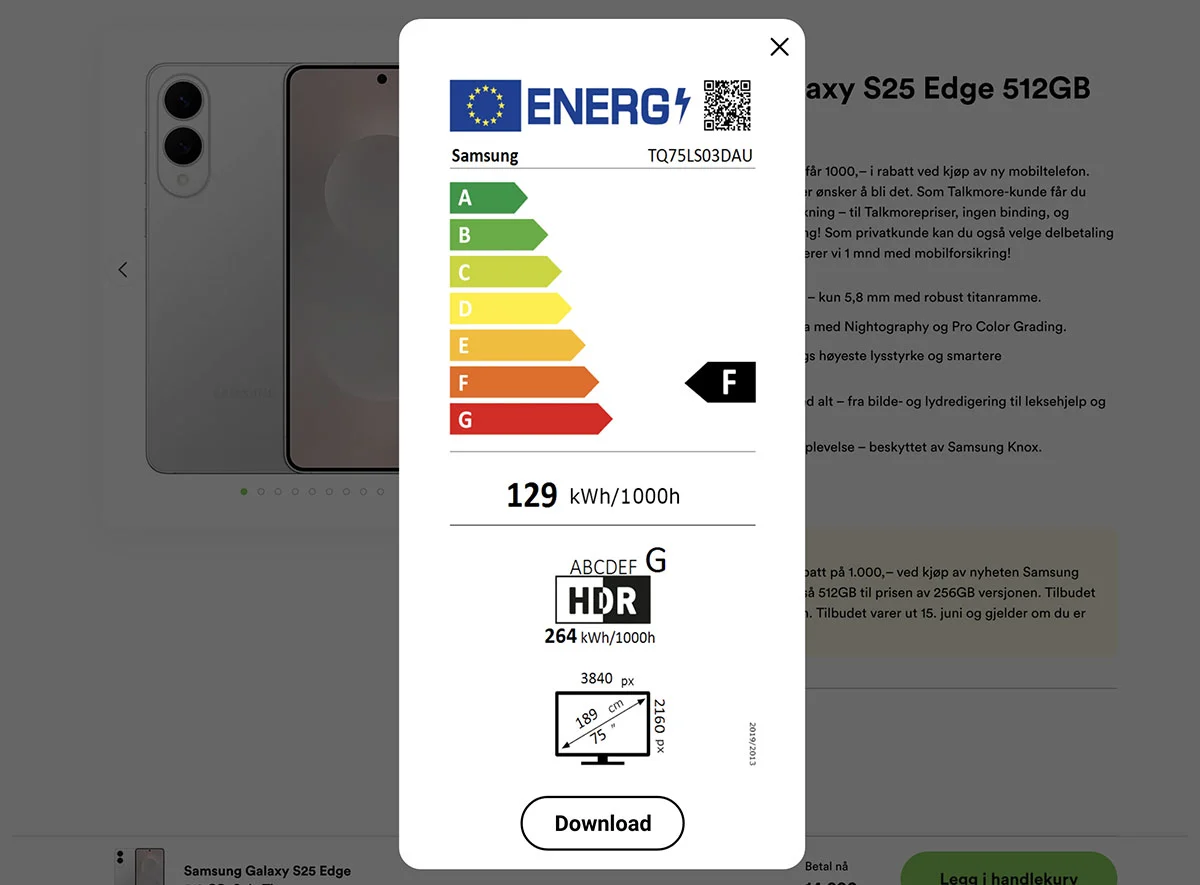
Bluestone PIM Energy Label Extension Example
Who in the Electronics Supply Chain Is Affected by DPP?
Digital Product Passport requirements are not connected to one department. They impact the entire electronics value chain, from design and sourcing to customs and point of sale.
Here is what it means in practice.
1. Electronics Manufacturers & OEMs
Manufacturers carry primary responsibility for creating and maintaining the digital passport data.
In practice, this means ensuring that product information is:
-
Structured and consistent across product models
-
Enriched with verified material and sustainability attributes
-
Supported by up-to-date compliance documentation
-
Clear on repair options and spare part availability
-
Transparent about software or support timelines where relevant
-
Linked to a unique, traceable product identifier
For many organisations, this information already exists, but it is scattered across internal systems, spreadsheets and supplier sources.
To meet DPP expectations and present accurate data across consumer-facing channels, consolidation becomes essential. A central product information layer ensures that regulatory, sustainability and product details remain consistent, complete and aligned wherever they are published.
2. Importers & Distributors
If you place electronic products on the EU market under your own name or import products from outside the EU, you take on regulatory exposure.
Practically, you must:
-
Verify that required DPP data exists before placing products on the market
-
Ensure documentation is accessible and up-to-date
-
Be prepared to respond to customs or regulatory queries
-
Validate supplier data before shipment
Customs authorities are expected to rely more heavily on structured product information. Missing or inconsistent data may delay market access.
3. Retailers & Marketplaces
Retailers do not create the passport, but they are responsible for making DPP information accessible at the point of sale.
This means:
-
Displaying passport access (QR, link, or interface) clearly
-
Ensuring data is current and consistent
-
Avoiding discrepancies between website information and DPP data
-
Cooperating with enforcement bodies if requested
For marketplaces, the risk is amplified. Electronics are already a focus of EU enforcement activity, and digital channels are under scrutiny.
4. Component & Material Suppliers
Suppliers will increasingly be required to provide structured upstream data.
For electronics, that typically includes:
-
Material declarations
-
Substance disclosures
-
Recycled content information
-
Carbon footprint data (where required)
-
Batch traceability for key components
If suppliers cannot provide structured, machine-readable data, downstream manufacturers cannot build compliant passports.
5. Non-EU Electronics Brands
The regulation applies to products placed on the EU market, not to where your company is headquartered.
If you manufacture in Asia, design in the US, assemble in the UK, but sell into the EU, you fall within scope.
Practically, this means:
-
Aligning data formats with EU requirements
-
Ensuring authorised representatives are informed
-
Preparing documentation in structured digital form
-
Coordinating compliance across global teams
Waiting until enforcement deadlines approach can create shipment risk and contractual friction with EU distributors.

Download free e-book
How to Create a Digital Product Passport
From 2026, the regulation will begin to apply to selected product groups, requiring companies to provide structured, detailed information about theproducts they place on the EU market.
Digital Product Passport for Electronics: Timeline
Electronics fall within the broader transition from the existing Ecodesign Directive to the new ESPR framework.
Between 2026 and 2030, product groups will gradually migrate into the updated system through delegated acts. Each act will define detailed technical requirements and compliance timelines for specific categories.
Beyond product-specific requirements, broader horizontal rules are also expected to apply across relevant electronics categories. These include:
- Repairability scoring, anticipated around 2027
- Recycled content and recyclability requirements for electrical and electronic equipment, anticipated around 2029
These measures will apply across multiple electronics categories, not just individual product groups.
Exact timelines and obligations will depend on the delegated acts published for each product group. However, the direction is clear: electronics companies should prepare for increased transparency around repairability, material composition and circularity.
The phased approach means organisations have time to prepare, but also that structured product data foundations should be built before detailed requirements are finalised.
How Does a PIM System Prepare Electronics Data for a Digital Product Passport?
For electronics manufacturers, the real challenge is not collecting information. It is bringing together layered technical, regulatory and sustainability data and turning it into structured, consistent and machine-readable records that can be shared externally.
Without a central structure, this information remains fragmented and difficult to control.
Bluestone PIM provides that structure. It centralises and enriches product data, standardises key attributes, validates completeness and keeps regulated information aligned across markets and customer-facing channels.
For organisations preparing for Digital Product Passport requirements, Bluestone PIM becomes the operational backbone. With its API-first architecture, governance controls and integration capabilities, it enables electronics companies to prepare DPP-ready product data and connect it seamlessly to publishing or regulatory platforms, making the Digital Product Passport a natural extension of their overall product information strategy.
How to Create a Digital Product Passport for Electronics
To make Digital Product Passport readiness practical and manageable, it helps to break the work into clear phases. For electronics companies in particular, where data spans engineering, compliance, suppliers and after-sales structure is essential.
We can break the process into 3 steps:
1. Audit and Collect
The first step is not creating new information, but understanding what already exists and where the gaps are.
A focused audit should assess whether:
-
Material and substance data is complete and up to date
-
Compliance documentation is linked to the correct product models
-
Repair and firmware policies are formally documented
-
Supplier declarations follow consistent formats
-
Key attributes required for future DPP compliance are clearly defined
At this stage, the goal is clarity:
-
Which data points will likely become mandatory?
-
Where are they stored today?
-
Who is responsible for maintaining them?
-
Are they structured, or only kept in documents?
The outcome should be a clear gap map that highlights missing attributes, inconsistent naming, undocumented processes and supplier data risks.
2. Structure and Govern Data
After identifying gaps and collecting relevant information, electronics companies need to centralise and prepare product data for external use.
Leading electronics brands use Bluestone PIM to centralise and enrich consumer-facing product information before it is distributed across:
-
E-commerce platforms
-
Marketplaces
-
Partner portals
-
Regulatory interfaces
-
Digital Product Passport publishing layers
To prepare for the Digital Product Passport for electronics Bluestone PIM software enables companies to:
Standardise and Enrich Product Information
-
Define structured fields for sustainability and compliance attributes
-
Enrich technical data with customer-friendly descriptions
-
Localise regulated and sustainability information for different markets
-
Ensure consistent terminology across product families
-
Manage variants without duplication
Improve Data Quality Before Publication
-
Enforce mandatory fields for regulated outputs
-
Flag incomplete sustainability or compliance information
-
Monitor completeness across product ranges
-
Validate required attributes before publishing
Maintain Controlled Traceability
-
Record when regulated attributes were updated
-
Track ownership of changes
-
Maintain version history for audit scenarios
Integrate Without Creating Silos
Bluestone PIM’s API-first architecture enables companies to:
-
Ingest supplier data in structured formats
-
Connect to ERP and other systems without duplicating records
-
Prepare structured outputs for Digital Product Passport providers
-
Adapt data models as ESPR delegated acts evolve
The principle remains clear:
- Internal systems manage technical and compliance processes.
- Bluestone PIM centralises, enriches and governs the product data that is shared externally.
By combining centralisation, enrichment and governance, Bluestone PIM turns Digital Product Passport readiness into part of a scalable, future-proof product information strategy.
3. Publish and Present the Digital Product Passport
Once product data is structured and validated, it needs to be made accessible.
Each product is linked to a unique identifier, typically a QR code, connecting the physical item to its structured digital record. Standards such as GS1 Digital Link enable this connection.
When scanned, the user is directed to a digital interface where passport information is presented clearly and in line with brand guidelines.
This ensures that updates made in Bluestone PIM flow automatically to the passport, without manual republication, conflicting versions or duplicated datasets.
For manufacturers with direct-to-consumer channels, the same structured data can enrich product pages with repair information, spare part availability and verified sustainability details.
To provide a DPP solution Bluestone PIM integrates with publishing partners, such as Kolla, to generate QR-linked passports and automate compliant data delivery, turning regulatory requirements into a consistent, customer-facing experience.
Digital Product Passport For Electronics: Start Before Final Rules Are Published
For electronics manufacturers selling into the EU, Digital Product Passport preparation is not optional, but it doesn’t have to be reactive.
Bluestone PIM is actively developing and refining its Digital Product Passport capabilities for electronics, aligning with ongoing ESPR updates and delegated acts.
By building on its existing centralisation, enrichment and governance foundation, Bluestone PIM is a scalable DPP-ready solution, enabling companies to prepare structured, compliant product data before final technical rules are fully defined.
The strength of your product information architecture will determine whether DPP becomes a burden or a business advantage.

Borgar Hestad
Chief Sustainability & Digital Trust Officer
Contact us
Contact Our Experts to Learn More
Speak with our experts to assess your DPP readiness and discover how Bluestone PIM can support your electronics strategy.
Thank you for submitting the form. We will reach out to you within 24 hours.
![How To Scale SKU-Heavy Catalogues Without Duplication [Guide For Retailers]](https://www.bluestonepim.com/hubfs/How-To-Scale-SKU-Heavy-Catalogues-Without-Duplication-1.png)