 Best Practices
Product launches in practice often look very different from the plan. A product is approved, but the data isn’t ready. Images are missing, specs sit in different files, and content needs reworking for every channel. Marketing waits, e-commerce waits, and the launch drags on, not through lack of effort, but through scattered product information.
Now picture the same launch with product data in one place. Teams work in parallel, content is ready for every channel, and products go live when they should.
If slow product launches are holding back your e-commerce growth, this guide explains why launches break down, what actually helps products go live faster, and how to reduce time to market without overloading your teams.
Why Product Launches Fail In Retail
Most retail launches fail long before go-live. The issues usually show up as “process gaps”, but the root cause is fragmented product information.
Typical blockers include:
- Product data spread across ERP, emails, supplier files, and spreadsheets
- Missing attributes discovered late in the launch cycle
- Manual rework for each channel and market
- No shared view of launch readiness
- Last-minute fixes that delay publishing
This is why time to market is so important. Every delay means lost revenue, weaker campaigns, and teams stuck in reactive mode.
💡Slow launches in retail are not caused by the lack of effort. They’re the result of product information drifting out of sync as teams, channels, and markets multiply.
How To Launch A Product Successfully In Retail
A fast launch comes from predictable execution. Strong product launch management follows a few clear principles.
1. Start With the One Source Of Product Truth
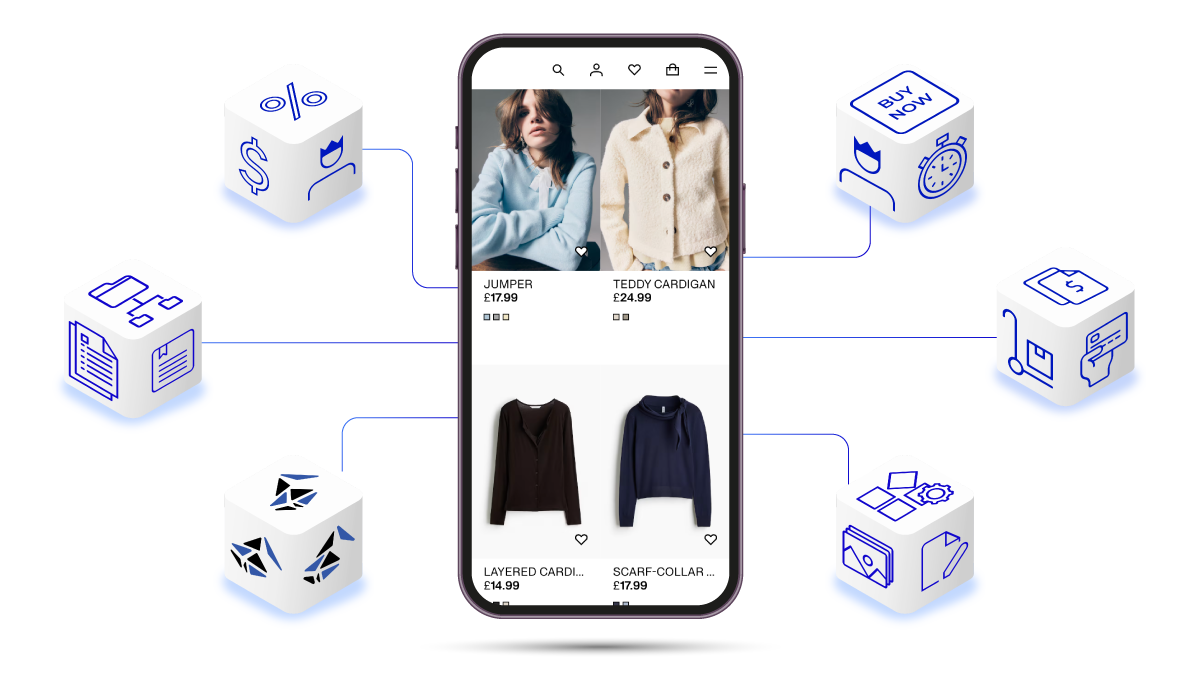
Every launch works best when product data lives in one shared place that teams trust, where updates happen once and flow everywhere, and everyone works from the same, current information.
This includes:
- Core attributes and specifications
- Images, videos, documents
- Channel-ready descriptions
- Market and language variants
Download free e-book
SEO Checklist for Product Managers
A practical checklist to help you optimise product pages at scale. Cover SEO, AEO, and GEO essentials, keep product data accurate, and improve visibility without manual work.
2. Separate Creation From Publication
Retail teams often wait for “perfect” content before publishing, but that slows everything down.
A better approach is to prepare minimum launch-ready data, publish on schedule, and optimise after go-live.
What counts as minimum launch-ready data?
-
- Accurate product title and identifier
- Core attributes (size, colour, material, etc.)
- One approved image
- Channel-specific price
- Mandatory regulatory or compliance fields
It’s common to worry about publishing incomplete data.
However, most customers care more about seeing new products quickly than about every detail being flawless on day one. Plus, modern PIM systems allow you to update and syndicate product data instantly, so improvements reach all channels at once.
Did you know? With Bluestone PIM, you can automate launch checks using custom rules. No more manual reviews. Just set your rules, and the system scans your product catalogue for missing data, images, or attributes automatically.
3. Build Launch Readiness Into The Process
Teams shouldn’t have to ask whether a product is ready at the last minute.
Launch readiness needs to be visible throughout the process.
What does this look like in practice?
- At any stage, everyone can see whether key data, like attributes, images, and documents, is complete for every channel.
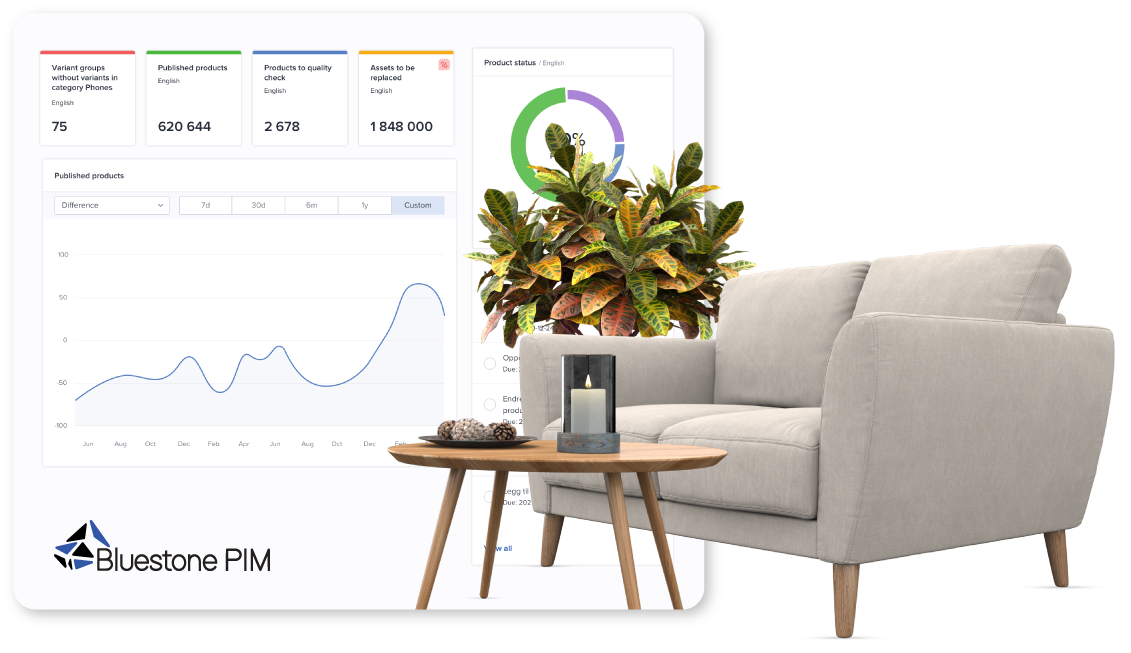
- You have a live dashboard showing which products are approved, which assets are still needed, and where any market-specific information is missing.
- Approval workflows and status checks are built into your system, not handled by scattered emails or last-minute meetings.
When launch readiness is visible and easy to track, teams can spot issues early and fix them before they become bottlenecks. This clarity means launches happen on time, with fewer surprises and less last-minute scrambling.
AI tools can also speed up product launches. See how top retailers use them ⬇️

Download free e-book
How Top Retailers Use AI: 7 Smart AI Use Cases for 2026
Packed with real examples, practical tips, and the tools behind the strategies, this e-book is a must-read for retail and e-commerce leaders who want AI to really work for their business.
How To Speed Up Product Launches In Retail At Scale
As assortments grow, coordinating launches through spreadsheets, emails, and ad-hoc checks no longer scales.
That’s when dedicated Product Information Management (PIM) software goes from “nice to have” to business critical.
What can a modern PIM do for you?
-
Centralise all product data: No more chasing updates across teams, everyone works from the same, always-up-to-date information.
-
Assign clear ownership: Each attribute, image, or description has a designated owner, so nothing slips through the cracks.
-
Enable task-based collaboration: Teams can see exactly what needs action and who’s responsible, with notifications and progress tracking.
-
Tailor views by market and channel: Instantly check what’s ready for each channel or region, so you never miss a key requirement.
-
Automate publishing workflows: Launch products simultaneously across all sales channels with controlled, repeatable processes.
PIM systems for retail such as Bluestone PIM focus on launch speed by keeping product data accurate, up to date, and ready for every channel from a single system.
Retailers using Bluestone PIM consistently report:
- Faster product launches
- Fewer last-minute errors
- Lower rework across teams

Download free e-book
5 Signs You Need a PIM System
Stop guessing. See the red flags teams miss until product data starts slowing growth. A quick, practical guide for e-commerce, marketing, and product teams.
How To Measure Success Of A New Product Launch
Speed alone is not enough. A fast launch that creates chaos or post-launch fixes is not a success. What matters is controlled acceleration.
To understand whether your launch process is improving, track metrics that show both speed and quality:
Time From Product Approval to Live
How long does it take from internal sign-off to the product being available across all intended channels? This reveals structural friction.
Data Completeness at Launch
What percentage of required attributes, assets, and channel fields are complete at go-live? A predictable launch should not depend on last-minute patches.
Number of Post-Launch Corrections
How many fixes are made in the first two weeks? Repeated corrections signal weak readiness control.
Channel Synchronisation Rate
Did all intended channels go live simultaneously, or did some lag behind? Launch consistency affects campaign performance.
Revenue Velocity In the First 30 days
Products launched with complete, channel-optimised data typically convert faster and generate stronger early sales momentum.
Over time, these metrics show whether your organisation is reducing friction or simply pushing products out faster without control.
Reducing Time To Market Is A Competitive Advantage
Retail moves fast, and product launches need structure to keep up.
The brands that win treat product information as infrastructure. They build visibility into readiness, remove manual coordination, and design their launch process to scale.
Bluestone PIM supports this by centralising product data, automating launch checks, and enabling teams to work in parallel from one trusted system.
Consistent and up-to-date product information is the fastest way to reduce slow product launches and improve time to market.
-1.png)