


Inriver Alternative Why Enterprise Teams Switch to Bluestone PIM
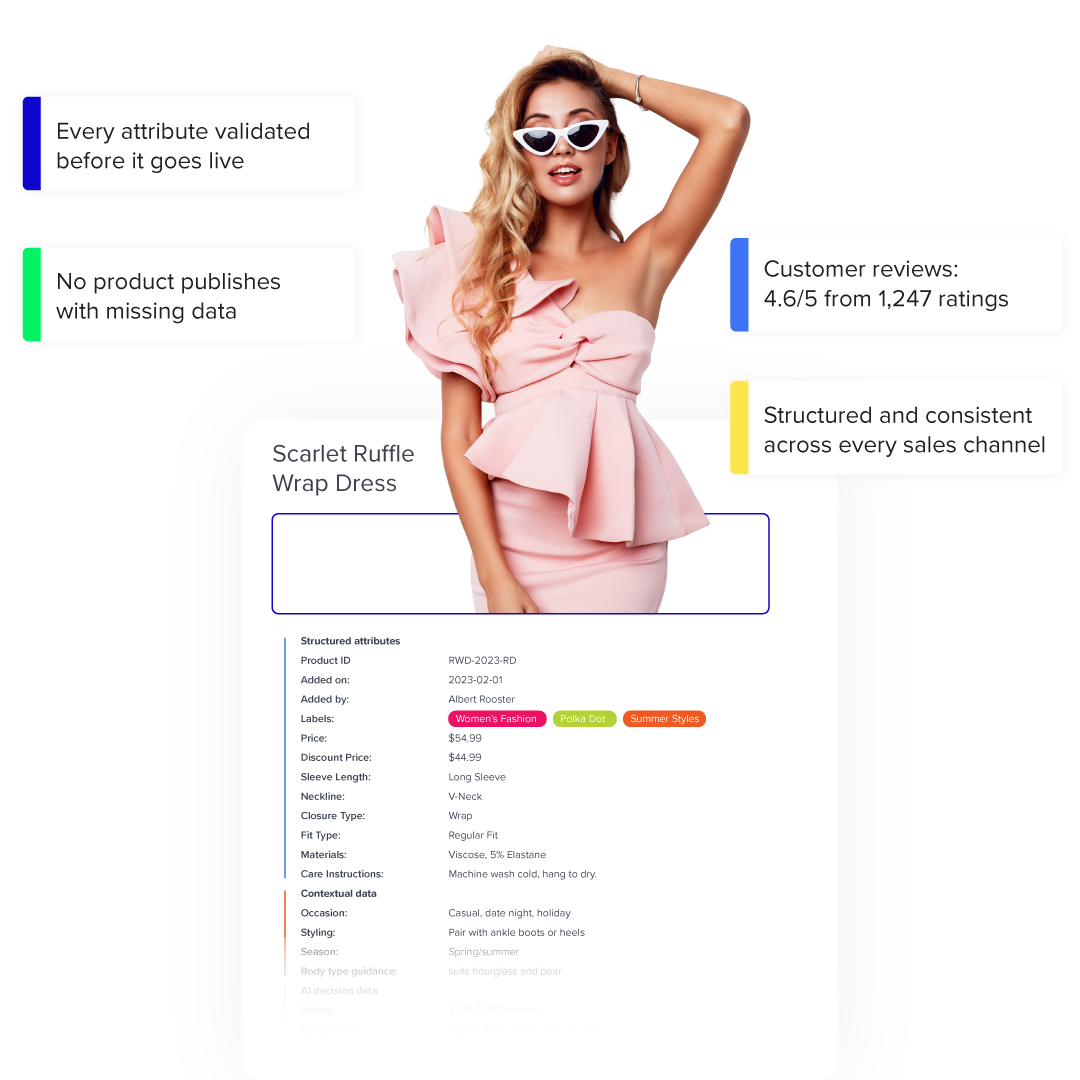
Three reasons enterprise teams leave Inriver: rising costs, slow implementations, too much custom development. Bluestone PIM fixes all three.
This page compares Bluestone PIM to Inriver on architecture, pricing, API access, and AI, with case studies from companies that switched.


Key Takeaways

Many companies have switched from Inriver to Bluestone PIM for its flexibility, open API access, predictable pricing, and stronger customer support.
Why Do Companies Switch From Inriver To Bluestone PIM?
Companies that outgrew their Inriver setup have moved their product data, teams, and workflows to Bluestone PIM.
Here is what drove the switch, and what changed after it:
Open APIs instead of locked documentation.
Bluestone PIM publishes 700+ API endpoints with open Swagger docs. Technical teams can evaluate the platform, test endpoints, and start building integrations before signing a contract.
A UI that your teams can actually use.
Inriver's interface is frequently described as outdated and difficult to navigate without specialist help. After migrating to Bluestone PIM, Stadium's teams managed content independently for the first time: no external partners, no central bottleneck.
From 10,000 to millions of SKUs with no performance trade-offs.
Bluestone PIM handles catalogues of any size without slowing down. Your performance stays consistent regardless of how fast your catalogue grows or how many users are working in the system at once.
Predictable costs, not add-on surprises.
Bluestone PIM includes DAM, CDN, AI tools and a supplier portal in every plan. Usage-based pricing means teams can model their costs before the first sales call.
AI you control.
Model-agnostic AI tools come standard with every Bluestone PIM plan. Teams choose their own AI model per task. Inriver's Inspire AI uses preselected OpenAI GPT models and is sold as an add-on.
Support that puts your business first.
Bluestone PIM is built by a team that cares about the people using it. You get direct access to in-house experts who understand your setup, respond quickly, and treat your deadlines as their own.
Bluestone PIM Features Overview
- How to centralise product data and keep it accurate across every channel
- How Bluestone PIM's AI tools cut time-to-market by automating manual tasks
- Why the architecture performs the same at 10,000 SKUs and 800,000
- How the Extension Hub connects Bluestone PIM to your existing stack with pre-built connectors.
How Much Does Inriver Cost?
Pricing Compared With Bluestone PIM
Independent industry sources estimate enterprise licences at €25,000 to €90,000+ per year, with first-year total costs (including implementation) that can exceed €100,000. The platform uses four tiers: Foundation, Core, Professional, and Enterprise. Some customers also need additional middleware for integrations, which adds to the cost.
Bluestone PIM takes a different approach. There are no feature tiers or locked capabilities. Every plan includes:
-
Native DAM with CloudFront CDN
-
AI tools for enrichment, with your choice of AI model
-
An integrated Supplier portal
-
PDF catalogue generation
-
700+ open API endpoints

Top 3 reasons why Bluestone PIM is the best alternative to inriver
How Does Bluestone PIM Compare To Inriver?
|
Area |
Bluestone PIM |
Inriver |
|
User interface
|
Customisable, modern UI. Teams manage content independently without specialist training.
|
Users on G2 describe the UI as dated, with a learning curve that slows onboarding for new team members.
|
|
Customer support & attention
|
Dedicated, in-house support. Direct access to experts who know the platform and the account.
|
Support is increasingly handled by third-party consultants rather than in-house product specialists, according to user reviews.
|
|
Performance at scale
|
Bluestone PIM is built on a cloud-native microservices architecture that handles large product volumes without slowing down.
|
Enterprise users report slow navigation, lag between sections, and intermittent errors during routine workflows.
|
|
Positioning
|
100% PIM-focused, best-of-breed. Built for composability with APIs and Packaged Business Capabilities.
|
Suite-style platform bundling PIM, syndication, and digital shelf analytics.
|
|
Architecture
|
Cloud-native on AWS. Isolated microservice instances per tenant. First PIM to achieve MACH certification (2021).
|
Multi-tenant SaaS on Azure. MACH Alliance member since December 2023.
|
|
Pricing model
|
Usage-based. DAM, CDN, AI, and supplier portal included in every plan. No per-module licences.
|
Four tiers (Foundation through Enterprise), custom-quoted. Add-on pricing for AI modules and advanced features.
|
|
AI capabilities
|
Built-in AI across all workflows. It helps with translations, improves data quality, generates product content, and flags errors in bulk.
|
Inspire AI on preselected OpenAI GPT models. Sold as add-on modules, not standard.
|
|
API accessibility
|
700+ publicly documented endpoints. Open Swagger docs, OAuth 2.0, TypeScript SDK, native webhooks with HMAC.
|
Comprehensive REST API with .NET SDK. Documentation requires authenticated access.
|
Brands that chose Bluestone PIM
Frequently Asked Questions: Bluestone PIM vs Inriver
1 - What is the best alternative to Inriver PIM?
2 - How much does Inriver cost?
3 - How does Inriver compare to Bluestone PIM?
4 - Does Bluestone PIM support data syndication like Inriver?
5 - Can I migrate from Inriver to Bluestone PIM?
6 - What does Bluestone PIM include that Inriver charges extra for?