


 Best Practices
Tariffs are front-page news now and your biggest operational risk.
In 2025, global trade has become a moving target. Overnight, a political shift or regulatory update can trigger a 145% tariff hike on your highest-margin products.
This isn’t theoretical. It’s already happening. To retailers, brands, and manufacturers across the world. And it’s not just tariffs. It’s the stack of disruption that’s defining this decade:
- Sanctions and trade wars
- Supply chain reshuffling
- Sustainability regulations (like the Digital Product Passport)
- Inflation and cost volatility
The new reality? Growth is no longer about scale. It’s about speed.
Top-performing e-commerce teams move fast because they have rebuilt how they manage product information. With AI for tariff management embedded directly into the PIM, they can respond to change quickly and keep everything aligned across channels.
3 Steps to Assess Your Tariff Risk
Before you can react, you must understand your exposure. Most companies fly blind until the invoice arrives. Here is how to audit your risk proactively:
-
Audit your "hidden" supply chain: Don't just look at your direct supplier. Map their sub-suppliers. If your Vietnamese supplier sources raw materials from a sanctioned region, you are still liable for the tariff.
-
Model cost scenarios: Run "What-If" simulations. If duties rise by 25%, does your margin disappear? Identify which SKUs become unprofitable and need immediate repricing.
-
Review supplier contracts: Check your terms. Who pays the duty? If Incoterms are DDP (Delivered Duty Paid), your supplier pays. If they are FOB (Free on Board), the bill—and the risk—is yours.
Why Do Legacy Systems Fail During Trade Wars?
Legacy systems fail because they are built for static data, making it impossible to rewrite 3,000 SKUs in 48 hours.
Every new tariff triggers a chain reaction: higher costs, supplier pivots, compliance rewrites, and SKU-level decisions. But most product systems can’t keep up, because they were built for static data.
- Spreadsheets buckle under daily change. What worked for quarterly updates now causes delays, errors, and burnout.
- Siloed systems create chaos. If your ERP, CMS, PIM, and channels don’t talk, you’re flying blind.
- Manual updates don’t scale. No team can rewrite and translate 3,000 SKUs by hand in 48 hours.
- Inconsistency causes risk. Mismatched pricing, old origin data, and non-compliant descriptions open the door to legal penalties and customer distrust.
If your competitors can relabel, reprice, and redistribute faster than you can react—you are already behind.
Free Resource: Don't get caught unprepared. Download the Bluestone PIM Features Overview to see how agile teams manage product data at scale.

Download free e-book
Features Overview: Still comparing PIM platforms in 47 open tabs?
Get the full Bluestone PIM features breakdown in one document: data modelling, channel syndication, digital assets, AI automation explained in plain language.
How Can You Stay Agile in a Trade War?
E-commerce businesses facing tariff turbulence should re-think the way they manage product information.
The solution isn’t patchwork fixes. It’s a smarter, scalable tech infrastructure anchored by a modern Product Information Management (PIM) system.
Here’s how leading brands are doing it:
1. Centralise Everything in a Modern PIM
A PIM centralises all your critical product attributes—prices, suppliers, HS codes, origin data, compliance requirements—into a single, structured system.
Why it matters:
- Everyone across product, operations, and commerce teams works from the same real-time data
- Updates are made once and reflected everywhere
- You gain a full audit trail for compliance and accountability
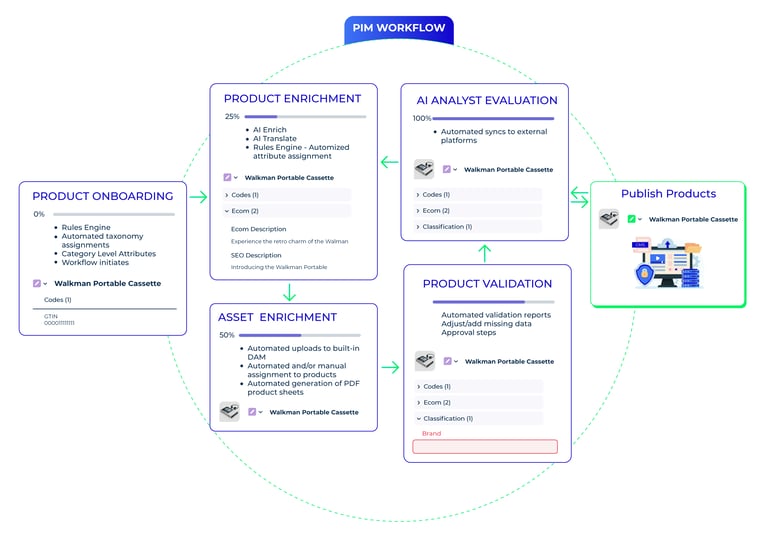
2. Use Bulk Actions to React at Scale
When prices, suppliers, or markets shift, the fastest way to manage thousands of SKUs is to work in bulk using your PIM.
Modern PIM systems allow you to filter products by attributes (e.g. “origin = China” or “supplier = XYZ”) and make structured, rule-based updates—instantly.
What this enables:
- Adjust pricing by product type or margin
- Mass updates to compliance labels, descriptions, or sourcing fields
- Preview-before-publish to ensure data integrity
3. Localise Without Duplicating Catalogues
Trade wars rarely affect all markets equally. That’s why a smart PIM with built-in localisation is essential.
Instead of duplicating catalogues for every region, a modern PIM lets you manage regional differences— content, availability, and compliance—within a single product model.
With the right setup, you can:
- Show or hide SKUs based on country-specific restrictions or profitability
- Adjust taxes, prices, and shipping details
- Deliver accurate, localised product content—without managing separate catalogues
4. Sync to All Channels in Real Time
A headless, API-first PIM like Bluestone PIM ensures that once updates are made, they’re automatically published across all connected systems —from Shopify and Amazon to your ERP and marketing materials.
Why it matters:
- No mismatched pricing or outdated product info
- No delay between "data ready" and "data live"
- Full visibility into where and when updates are published
Why Is AI No Longer Optional for Tariff Response?
When tariffs hit, it’s not about strategy. It’s about speed. You have hours—not weeks—to react.
AI can be your strongest ally. But only when it's built into your PIM system, not bolted on as an afterthought.
Here’s what AI within your PIM system looks like in action:
✅ Identify Impacted SKUs Instantly with Filters
With AI embedded in your PIM, you can instantly filter all SKUs based on country of origin, supplier, or HS code—and identify which products are affected by new tariffs.
From there, you can bulk update pricing, compliance info, or content in seconds.
✅ Rewrite Product Content in Seconds
When origins shift—like changing "Made in China" to "Made in Vietnam"—AI in your PIM can instantly generate new, compliant, and SEO-friendly product descriptions in bulk.
In Bluestone PIM, you’ll see a preview of all suggested changes before anything goes live—so you can review, edit if needed, and hit the “Approve” button with confidence.
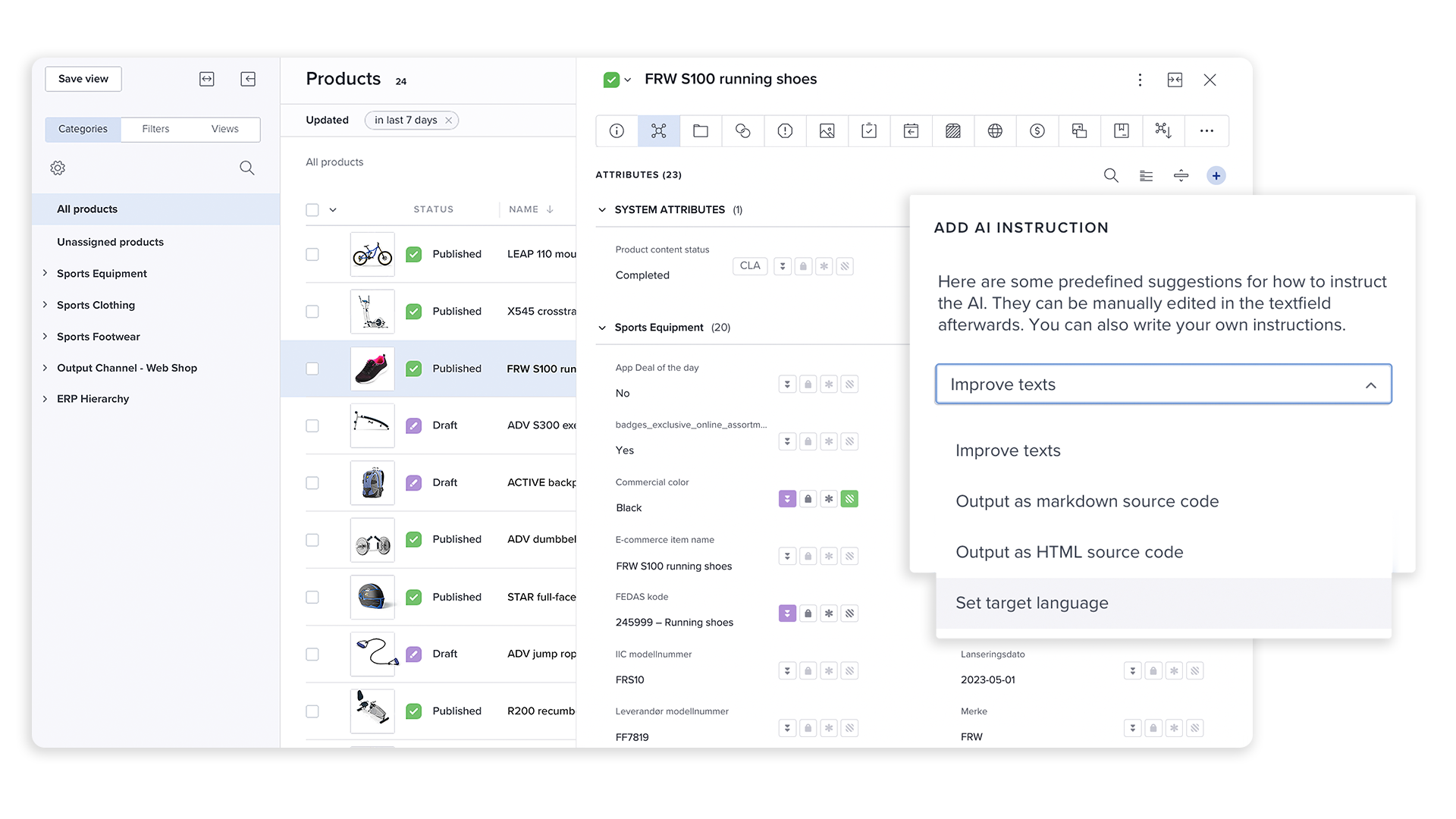
✅ Translate and Localise Without Leaving Your Workflow
When product content needs to be updated across multiple markets, AI in your PIM can handle translations directly in the interface—no switching tools or breaking your workflow.
You can update several languages in minutes and keep everything aligned without slowing down the publishing process.
How Does Bluestone PIM Enable Agility?
Bluestone PIM combines a flexible, API-first architecture with seamlessly integrated AI to help teams adapt quickly when markets shift.
| Challenge | How Bluestone PIM Helps |
|---|---|
| Tariff-driven price changes | Filter and bulk-update SKUs by region/supplier |
| Origin & compliance updates | AI rewrites product content instantly |
| Supplier switches | Centralised update of sourcing fields |
| Market-specific complexity | Manage all variants in one catalogue |
| Channel consistency | Real-time sync via 700+ API endpoints |
According to the Gartner® Market Guide for PIM Solutions 2025, agility and AI integration are now primary drivers for PIM adoption. With Bluestone PIM, product teams can move from reactive workarounds to a scalable, structured approach.
Download free e-book
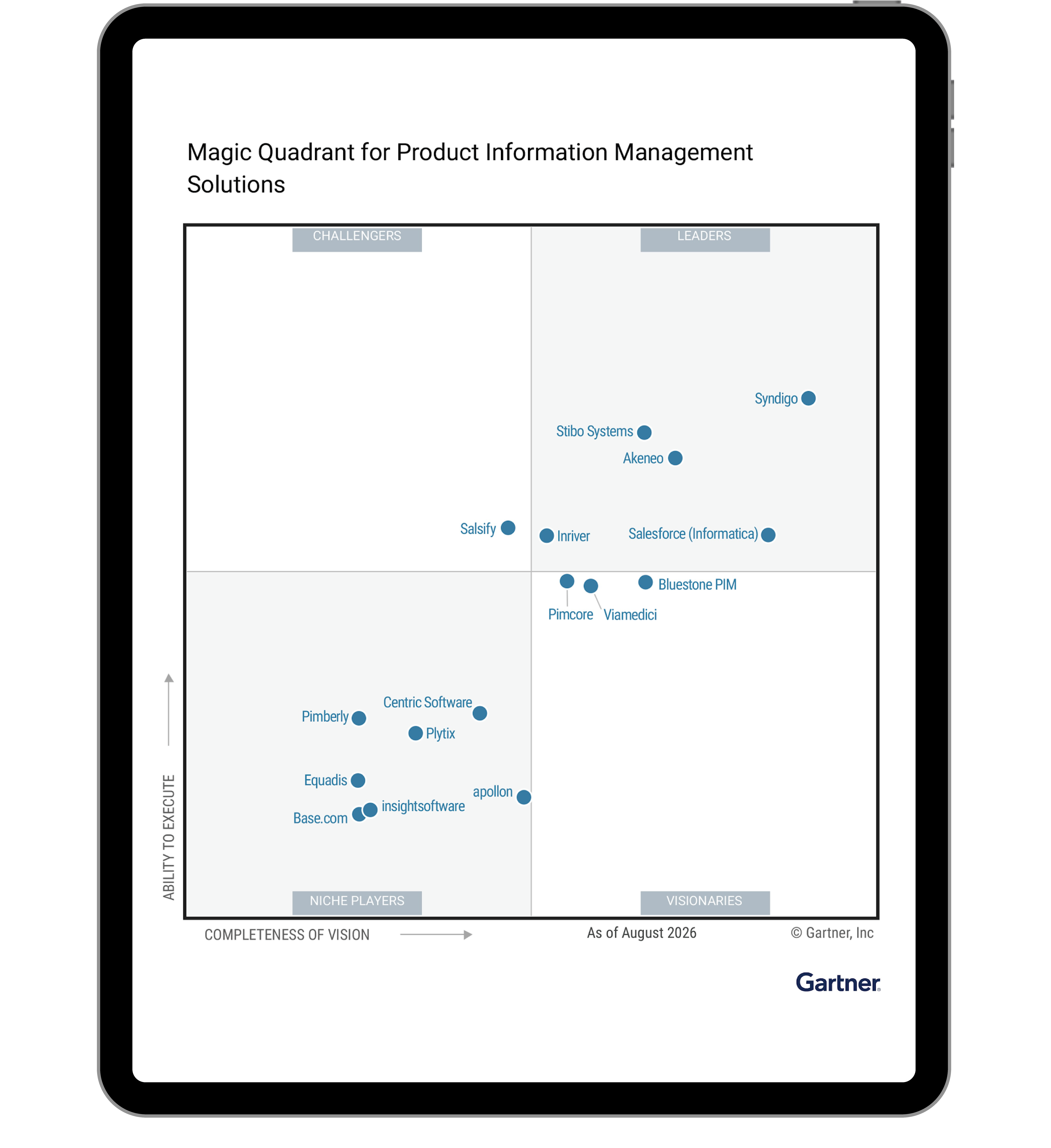
Gartner® Magic Quadrant™ for Product Information Management Solutions
This report from Gartner® analysts helps business and technology leaders understand their options and make a confident decision when choosing a PIM solution.
Trade Wars Are Unpredictable. Your Product Data Shouldn’t Be
Competitive advantage now hinges on how quickly your organisation can respond to new tariffs, shifting suppliers, or changing market regulations.
Bluestone PIM gives you a system built for flexibility and control when it matters most.
With Bluestone PIM, your team can:
- Spot product data gaps with AI-driven insights
- Sync updates across all channels automatically
- Manage localised content without duplicating catalogues
- Apply rule-based changes across thousands of SKUs—fast
Ready to calculate the cost of inaction? Try our ROI Calculator to estimate how much revenue you could protect by investing in a composable PIM system.
Book a free consultation to explore how Bluestone PIM can support your tech stack and business goals:
Best Practices
 Best Practices
19 Oct 2026
3 Best Practices For PIM Implementation
 Product Information Management