
 Product Information Management
Digital Product Passport (DPP) for fashion is expected to become mandatory under the EU Ecodesign for Sustainable Products Regulation (ESPR) from around mid-2027. Fashion brands selling into the EU have limited time to redesign how product and supply chain data is structured, governed, and presented to consumers.
This guide explains what Digital Product Passport solutions for the fashion industry actually involve and shows how Bluestone PIM can serve as the foundation of your DPP strategy. From regulated data governance to consumer-facing experiences that strengthen trust and brand value.
What DPP Means for Fashion Leaders
-
EU Digital Product Passport rules will require structured, verifiable product data for textiles. That shifts sustainability from marketing language to regulatory accountability for any brand selling into the EU.
-
Without a centralised foundation such as Bluestone PIM, compliance efforts fragment across systems and teams.
-
Cross-functional alignment becomes non-negotiable. CSR, sourcing, IT, and e-commerce must work from the same governed dataset to avoid inconsistencies and regulatory risk.
-
Transparency can become a commercial advantage. When verified DPP data feeds into branded microsites, compliance evolves into customer trust and differentiation.
How Do I Prepare My Fashion Brand For The EU Digital Product Passport (DPP) By 2027?
Digital Product Passport preparation starts with structuring and governing product data in a central system such as Bluestone PIM, not with generating QR codes.
The EU’s ESPR regulation requires verifiable product information covering materials, sustainability attributes, and lifecycle guidance. That regulatory obligation affects any brand placing garments on the EU market, regardless of where production happens. What it implies is simple: fragmented spreadsheets and disconnected PLM, ERP, and supplier files will not meet compliance thresholds.
Preparation typically follows four workstreams:
-
Map supply chain data sources.
-
Standardise product attributes and ESG data.
-
Design the consumer-facing DPP experience.
-
Implement durable data carriers (QR/NFC) linked to governed records.
Bluestone PIM acts as the single source of truth for product information that consolidates supplier inputs, validates attributes, and distributes structured data to DPP providers and all e-commerce channels. Without that foundation, DPP projects stall at the data reconciliation stage.

Download free e-book
How to Create a Digital Product Passport
From 2026, the regulation will begin to apply to selected product groups, requiring companies to provide structured, detailed information about theproducts they place on the EU market.
What Data Do I Actually Need To Collect For A Digital Product Passport For Fashion?
Digital Product Passport data for fashion will likely include material composition, recycled content, chemical disclosures, manufacturing tiers, and end-of-life guidance and Bluestone PIM can model and validate these attributes.
The European Commission has indicated that DPP datasets must be machine-readable, interoperable, and standards-based. That requirement affects product, sustainability, sourcing, and compliance teams simultaneously.
Common data categories include:
-
Unique product identifiers (GTIN/SKU).
-
Fibre composition and recycled percentages.
-
Country of origin and tiered manufacturing data.
-
Environmental indicators such as carbon footprint.
-
Care, repair, and recycling instructions.
-
Packaging material disclosures.

Collecting data is only half the task. What matters is validation, version control, and audit history. Bluestone PIM provides configurable data models, completeness scoring, and role-based governance to ensure DPP data is not only captured but defensible.
How To Create A Digital Product Passport For Fashion?
Creating a Digital Product Passport for fashion requires building a structured, governed product data foundation in Bluestone PIM before connecting it to a passport interface or QR code.
Creating a Digital Product Passport for textiles follows five structured steps:
1. Define Your DPP Data Model
Start by mapping regulatory requirements to your existing product and sustainability attributes. This typically includes fibre composition, recycled content, supplier tiers, environmental indicators, and care guidance.
Bluestone PIM enables you to create extensible data models with validation rules and completeness scoring. That matters because incomplete or inconsistent attributes weaken both compliance and consumer credibility.
2. Consolidate Supplier Data
Fashion supply chains are multi-tiered and globally distributed. DPP compliance requires integrating supplier-provided information into a governed system.
By centralising product and supplier attributes in Bluestone PIM, brands eliminate spreadsheet fragmentation and establish a single source of truth. This reduces regulatory exposure and improves audit readiness.
3. Validate And Govern The Dataset
A Digital Product Passport must reflect what was actually produced, not just design intent. Governance controls, like versioning, edit history, role-based permissions are therefore essential.
Leading fashion companies already use Bluestone PIM to provide audit trails and attribute validation logic ensuring that DPP data is defensible and consistent across e-commerce platforms, registries, and marketplaces.
4. Connect To A Passport Delivery Layer
Once structured, validated data exists, it can be delivered to a DPP infrastructure provider via API. This layer manages the unique identifier and generates the digital identity accessible through QR codes or NFC tags.
Because Bluestone PIM is API-first, brands can integrate with chosen passport providers without duplicating product data across systems.
5. Design The Consumer-Facing Experience
A Digital Product Passport is not just a regulation, but also a customer touchpoint. Consumers scanning a QR code expect clear, credible information on materials, origin, and care.
Structured data from Bluestone PIM can power branded, mobile-first microsites that communicate sustainability credentials, repair guidance, and lifecycle transparency in a format aligned with brand identity. When done correctly, DPP presentation strengthens trust and differentiates products in competitive markets.
Digital Product Passport Solutions For The Fashion Industry: What Are They And Examples
Digital Product Passport solutions for the fashion industry are technology ecosystems that structure, validate, and publish regulated product data and Bluestone PIM provides the governance backbone within that ecosystem.
Under the EU Ecodesign for Sustainable Products Regulation (ESPR), DPP must contain machine-readable, interoperable product information linked to a unique identifier. That regulatory requirement affects brands, manufacturers, and retailers placing garments on the EU market. What it implies is that no single tool can deliver compliance in isolation; DPP solutions are layered architectures.
In practice, Digital Product Passport fashion industry solutions fall into five categories:
1. Product Information Management (PIM) Platforms
PIM platforms centralise and govern product data across sourcing, sustainability, marketing, and e-commerce teams.
Bluestone PIM is the Digital Product Passport (DPP) solution that ensures your product data is structured, validated, and ready to meet EU DPP requirements.
The EU DPP requires structured and standardised product data. Without a governed product model, brands cannot reliably feed passport registries, QR systems, or consumer interfaces.
Bluestone PIM enables:
- Custom DPP-ready data models
- Attribute validation and completeness scoring
- Version control and audit trails
- API distribution to passport providers and registries
Example: A fashion brand uses Bluestone PIM to consolidate fibre composition, supplier tier data, and carbon metrics into one validated dataset that feeds both its EU DPP registry submission and its website.
Download Case Study
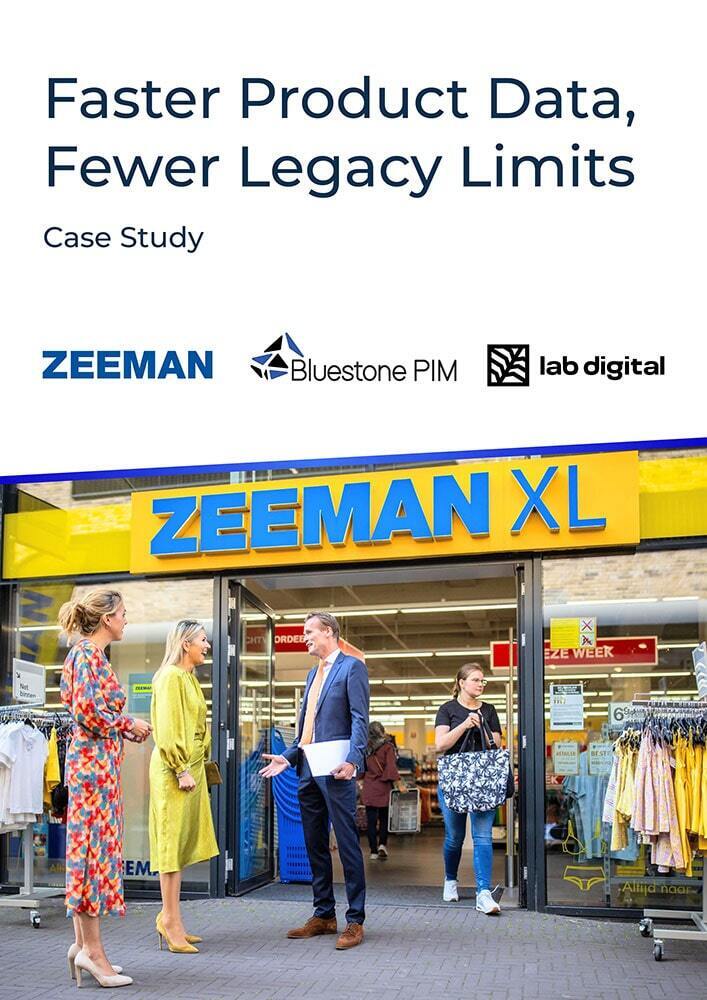
Case study: Zeeman
How Zeeman Cut Product Localisation from 6 Weeks to 1. Discover how they transformed product data operations and optimised their customer buying journey foundations using Bluestone PIM.
Get your copy here2. Supply Chain Visibility and Traceability Platforms
These tools capture upstream supplier data, often across multiple tiers.
The ESPR requires traceability across economic operators placing products on the EU market. Brands must move beyond supplier spreadsheets and establish structured upstream visibility.
Example: A footwear brand integrates supplier certification data into Bluestone PIM, where it is linked to SKU-level records before being distributed to the DPP layer.
3. Passport Infrastructure Providers
These vendors generate unique identifiers, manage registry integration, and connect QR codes or NFC tags to digital records.
The DPP framework requires a visible data carrier linked to a unique identifier. Compliance depends on durable linkage between the physical garment and its digital passport.
Example: A clothing brand connects Bluestone PIM via API to a DPP provider that generates QR codes tied to persistent product records stored in the PIM.
4. Consumer-Facing Experience Platforms
These platforms present DPP data through branded microsites or embedded web components.
The regulation emphasises long-term accessibility for the expected lifetime of the product. Brands need scalable digital presentation layers, not static landing pages.
Example: Structured data from Bluestone PIM powers a branded DPP microsite experience where consumers access verified material composition, repair guidance, and environmental indicators through a QR scan.
Scan the QR code to see the Digital Product Passport example powered by Kolla. 
5. Blockchain-Based Verification Solutions
Some DPP solutions incorporate blockchain to enhance immutability and authentication.
Blockchain is not mandated by EU DPP regulation. While useful for authentication or anti-counterfeiting, blockchain alone does not solve product data governance.
Example: A luxury apparel company anchors selected supply chain events on blockchain while maintaining structured, publishable DPP data in Bluestone PIM.
How Do These Digital Product Passport Solutions Work Together?
Digital Product Passport fashion industry solutions operate as a composable stack.
-
Supplier platforms collect upstream data.
-
Bluestone PIM structures, validates, and enriches it.
-
Passport infrastructure providers generate identifiers.
-
Consumer layers present the data.
The strategic decision is not which QR code vendor to choose; it is where your product data is governed. Brands that anchor their architecture in Bluestone PIM retain control of their dataset, maintain interoperability across partners, and adapt more easily as delegated acts evolve.
In short, Digital Product Passport solutions for the fashion industry are not standalone products. They are integrated systems, and the quality of the product information backbone determines whether DPP becomes a compliance burden or a strategic advantage.
EU Digital Product Passport for Fashion: Build the Data Foundation Before 2027
For brands selling into the EU upcoming Digital Product Passport regulation means rethinking how product and supply chain data is structured, validated, and shared.
Effective Digital Product Passport solutions combine traceability tools, passport infrastructure, and consumer-facing layers, all built on a strong data foundation.
Bluestone PIM is the Digital Product Passport solution that provides this foundation. It centralises, structures, and validates product data, enabling compliant DPP delivery while also supporting branded, customer-facing experiences across channels.

Borgar Hestad
Chief Sustainability & Digital Trust Officer
Contact us
Preparing for EU DPP?
Talk to our team to discover how Bluestone PIM can power your Digital Product Passport strategy and turn compliance into competitive advantage.
Thank you for submitting the form. We will reach out to you within 24 hours.