
![How To Scale SKU-Heavy Catalogues Without Duplication [Guide For Retailers]](https://www.bluestonepim.com/hubfs/How-To-Scale-SKU-Heavy-Catalogues-Without-Duplication-1.png) Product Information Management
Product Information Management
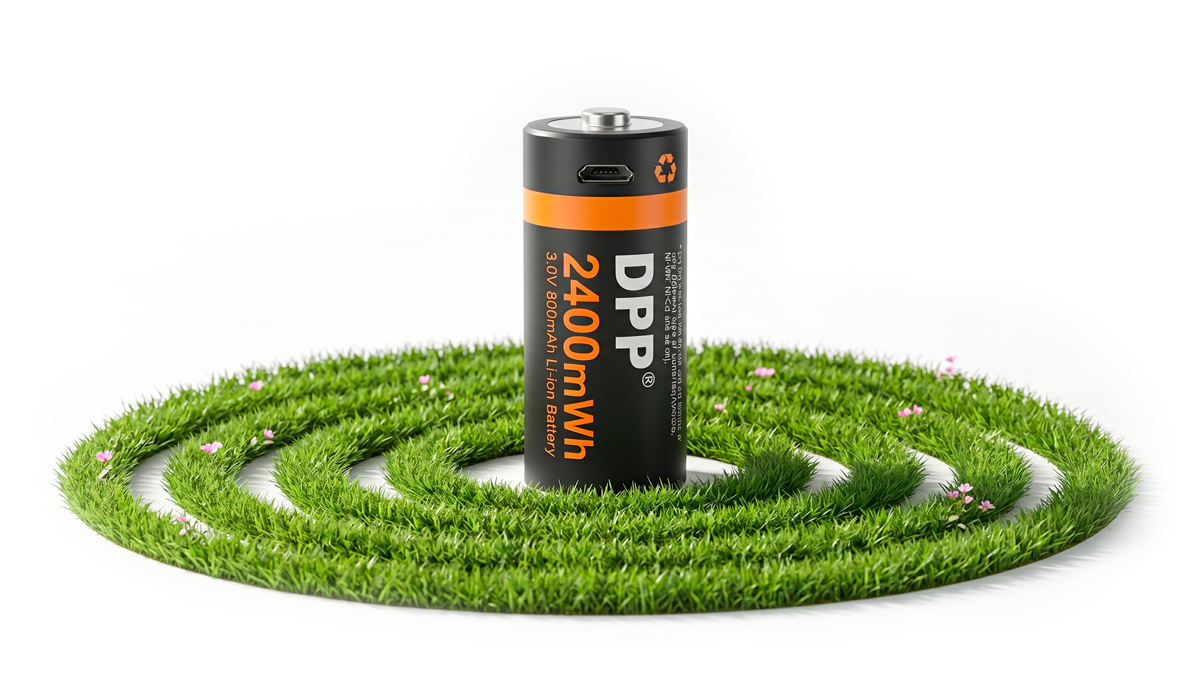
The EU Battery Passport is the first mandatory Digital Product Passport (DPP) anywhere in the world. Under Regulation (EU) 2023/1542, every electric vehicle battery and every industrial battery above 2 kWh placed on the EU market must carry a digital passport by 18 February 2027.
For manufacturers and importers outside the battery sector, this deadline is important just as much. The battery passport is the proof-of-concept for the entire EU DPP system under the Ecodesign for Sustainable Products Regulation (ESPR, Regulation (EU) 2024/1781). How it succeeds or fails will shape the enforcement model, technical architecture, and data requirements that apply to textiles, electronics, furniture, and every other product category covered by the ESPR Working Plan 2025 to 2030.
What Does the EU Battery Passport Actually Require?
The battery passport is a structured digital record that holds verified data across five areas. Each battery gets its own unique identifier at unit level, not just a model reference. This means every individual battery can be tracked across its full lifecycle.
-
Product identity and specifications cover the basics. Each passport includes the unique battery identifier (aligned with EN/IEC 62902), chemistry, type, capacity, voltage, weight, manufacturing date, and manufacturer details. If the manufacturer sits outside the EU, an authorised EU representative must be listed.
-
Environmental data goes much deeper. The passport must report lifecycle CO₂ emissions per kWh, from raw material extraction through to transport. It must include a carbon footprint rating (A to D), even as the exact calculation method is still being finalised. On top of that, recycled content levels for cobalt, lithium, nickel, and lead must be disclosed, with thresholds rising over time. By 2031, this means at least 16% cobalt, 6% lithium, and 6% nickel, with higher targets set for 2036.
-
Performance and lifecycle data is the most technical part. Battery systems need to track state of health, charge and discharge cycles, total cycle count, remaining useful life, and temperature history. The passport is not static. It updates continuously through data from the battery management system.
-
Composition and materials data moves beyond broad categories. It includes active materials, electrolyte composition, critical raw materials with country-of-origin data, and any hazardous substances under REACH Regulation. Substances of concern above 0.1% by weight must be listed.
End-of-life information focuses on what happens next. The passport provides dismantling instructions, recycling guidance based on battery chemistry, collection point details, and an assessment of whether the battery is suitable for a second life based on its condition.
What Does the European Commission's New Data Points Guidance Add?
On 21 August 2026, the European Commission published an updated guidance document, Digital Batteries Passport: Data Points by Category. It sets out 71 data points relevant to EV, LMT (light means of transport), and industrial batteries, and states for each one whether it is mandatory, optional, conditional, or not required as of the 18 February 2027 deadline. Every data point is linked to its legal source in Regulation (EU) 2023/1542 or a related delegated or implementing act.
The guidance is aimed primarily at economic operators across the battery value chain: manufacturers, importers, and anyone responsible for populating the passport. Conformity assessment bodies and market surveillance authorities can use it too, since it gives everyone the same reference point for what "mandatory" means for a given battery category. The document carries no new legal weight on its own. It should be read alongside the regulation itself and any delegated or implementing acts.
For manufacturers, the practical value is granularity. A field marked mandatory for industrial batteries above 2 kWh but optional for LMT batteries changes what a supplier data collection template needs to capture, and for which product line. Read the full guidance document before finalising your data model.
Bluestone PIM lets teams map each of the 71 data points to a structured field, tag it against the relevant battery category, and validate completeness before the passport goes live, rather than finding gaps after the February 2027 deadline.
For a step-by-step walkthrough of turning these data points into a structured passport, the Digital Product Passport e-book covers the full process from raw supplier data to a compliant record.

Download free e-book
How to Create a Digital Product Passport
From 2026, the regulation will begin to apply to selected product groups, requiring companies to provide structured, detailed information about theproducts they place on the EU market.
What Is the Implementation Timeline?
Several requirements under Regulation (EU) 2023/1542 are already in effect. The regulation entered into force in August 2023 and began applying in February 2024. Carbon footprint declarations for EV batteries became mandatory in February 2025. For industrial batteries above 2 kWh, carbon footprint declarations apply from February 2026.
The confirmed upcoming milestones are:
| Date | Requirement |
|---|---|
| August 2026 | Expanded harmonised labelling (manufacturer info, capacity, hazardous substances, critical raw materials) |
| 18 February 2027 | Battery Passport mandatory for EV and industrial batteries above 2 kWh |
| 2027 | QR code requirements for applicable batteries |
| August 2027 | Due diligence obligations for supply chain sourcing |
| February 2029 | Carbon footprint maximum thresholds: industrial batteries exceeding limits banned from EU market |
The labelling requirements in August 2026 are the practical first step. Organisations that treat this as a dress rehearsal for the full passport will be better prepared when the February 2027 deadline arrives.
What Software Helps Manufacturers Manage Battery Digital Product Passport Compliance?
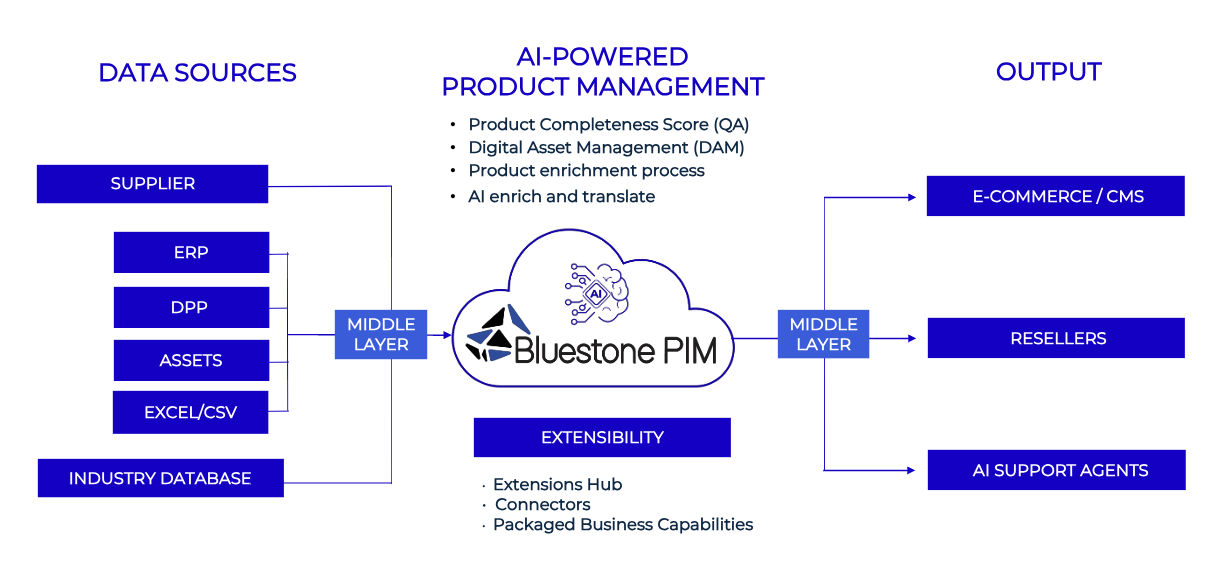
A product information management (PIM) platform is the software category built for this job. It centralises battery data from suppliers, structures it against the passport's required fields, and keeps it aligned as EU requirements are finalised, rather than leaving compliance data scattered across spreadsheets and supplier emails.
Which digital product passport tools help manufacturers meet battery compliance standards?
Tools that map directly to the passport's five data categories, product identity, environmental data, performance and lifecycle data, materials composition, and end-of-life, do this job well. Look for validation rules that catch missing fields before submission, a supplier portal for gathering data across multiple tiers, and export support for GS1 Digital Link and JSON-LD formats. Bluestone PIM structures battery data this way natively, with rule-based validation flagging gaps against the mandatory fields for each battery category.
How do PIM systems compare on battery digital product passport requirements?
What separates one platform from another is structural. Check whether a platform enforces validation against the mandatory, optional, and conditional data points published in the Commission's August 2026 guidance, whether it supports the GS1 Digital Link and QR code standards the passport requires, and whether supplier data collection is built in rather than bolted on through a separate integration. A platform that treats these as native functions needs less custom development to reach the February 2027 deadline.
Are headless platforms suited to handling complex battery product data?
Battery passport data needs to reach several destinations at once: the EU central registry, a manufacturer's own website, and distributor catalogues, each in a different format. A headless, API-first PIM exposes that data through API endpoints rather than locking it inside one front-end template, so each destination can pull it in the format it needs without a separate export process for every channel.
Are there specific tools that simplify creating Digital Product Passports for batteries?
Yes. Tools that combine a structured data model with pre-built export formats remove most of the manual assembly work. Instead of compiling battery data into a passport format by hand, the platform holds the data in fields that already match the passport's structure and generates the output required for the QR code and registry submission.
What does agent-based support for battery passport auditing actually mean?
Auditing a battery passport means checking that the underlying data is accurate and traces back to a verifiable source. Bluestone PIM's AI Agent works inside the platform's own structured data model, so any check it runs against completeness or consistency is checking real product fields, not scanning unstructured documents. It supports the data governance work behind an audit; it does not replace a compliance team's sign-off on what gets published.
Why Should Organisations Outside the Battery Sector Pay Attention to the Battery Passport?
The battery passport establishes the technical blueprint that all Digital Product Passports under ESPR will follow. The infrastructure is identical: GS1 Digital Link URIs for product identification, QR codes conforming to ISO/IEC 18004 as data carriers, JSON-LD structured data formats, and the three-tier access model (public data for consumers, restricted data for recyclers and repairers, authority data for market surveillance and customs).
If you understand how the battery passport works technically, you understand roughly 80% of how every future DPP will work. The differences between product categories will be in the data fields, not the underlying architecture.
The enforcement model is also being tested through the battery passport first. The EU's Information and Communication System for Market Surveillance (ICSMS) is being upgraded to handle DPP queries. Customs authorities will verify battery passport registrations against the EU central DPP registry. National authorities must enforce penalties that are, in the regulation's language, "effective, proportionate, and dissuasive." The answers to how aggressively this is enforced will directly inform what organisations in textiles, electronics, and furniture should expect when their DPP requirements activate.
What Does the Battery Passport Reveal About DPP Compliance Costs?
Early implementations in the battery sector are generating the first real-world cost benchmarks. The largest cost component is data collection, not technology.
For manufacturers of textiles, electronics, or construction products, the supply chain data collection challenge is often more complex than for batteries. A single product can involve five to eight suppliers across multiple countries. The data exists somewhere, but nobody has structured it in a format that a DPP system can ingest.
Bluestone PIM helps manufacturers collect, validate, and structure Digital Product Passport data from across their supply chains in one governed system. The supplier portal collects data from partners in a consistent format, and validation rules flag gaps before they become compliance failures. For organisations preparing DPP infrastructure ahead of their category's deadline, the challenge is not the passport itself: it is getting the underlying product data into a state where the passport can be populated accurately and maintained over time.
How Should Organisations Prepare Now?
Awareness of the Digital Product Passport (DPP) is high, with 97% of organisations recognising it.
Most organisations are still early in their journey: 53% are “getting started”, 16% plan to start soon, 12% have yet to begin senior-level discussions, and 19% describe themselves as well prepared.
The organisations making the most progress share a clear approach. They treat DPP as a data governance challenge first, with compliance following from that foundation.
The next step is turning intent into execution:
-
Start with your data. Begin collecting sustainability inputs from suppliers now. Material composition, country of origin, carbon footprint data, and recycled content all sit across multi-tier supply chains. Gathering this takes time, and early action keeps your timeline under control.
-
Build on standards from the start. Battery passports already rely on GS1 Digital Link URIs and structured data formats, and the same model will apply across DPP categories under ESPR. A standards-based product data platform avoids costly rework later.
-
Plan for tiered access early. The battery passport splits data into public, restricted, and authority-level views, each with different rules and obligations under GDPR. This structure is set to carry over to other product categories, so your data architecture needs to reflect it.
-
Keep the timeline in mind. The ESPR Working Plan 2025–2030 outlines priority product groups, with compliance windows that move quickly once rules are published. Early preparation gives you room to adapt as requirements are finalised.